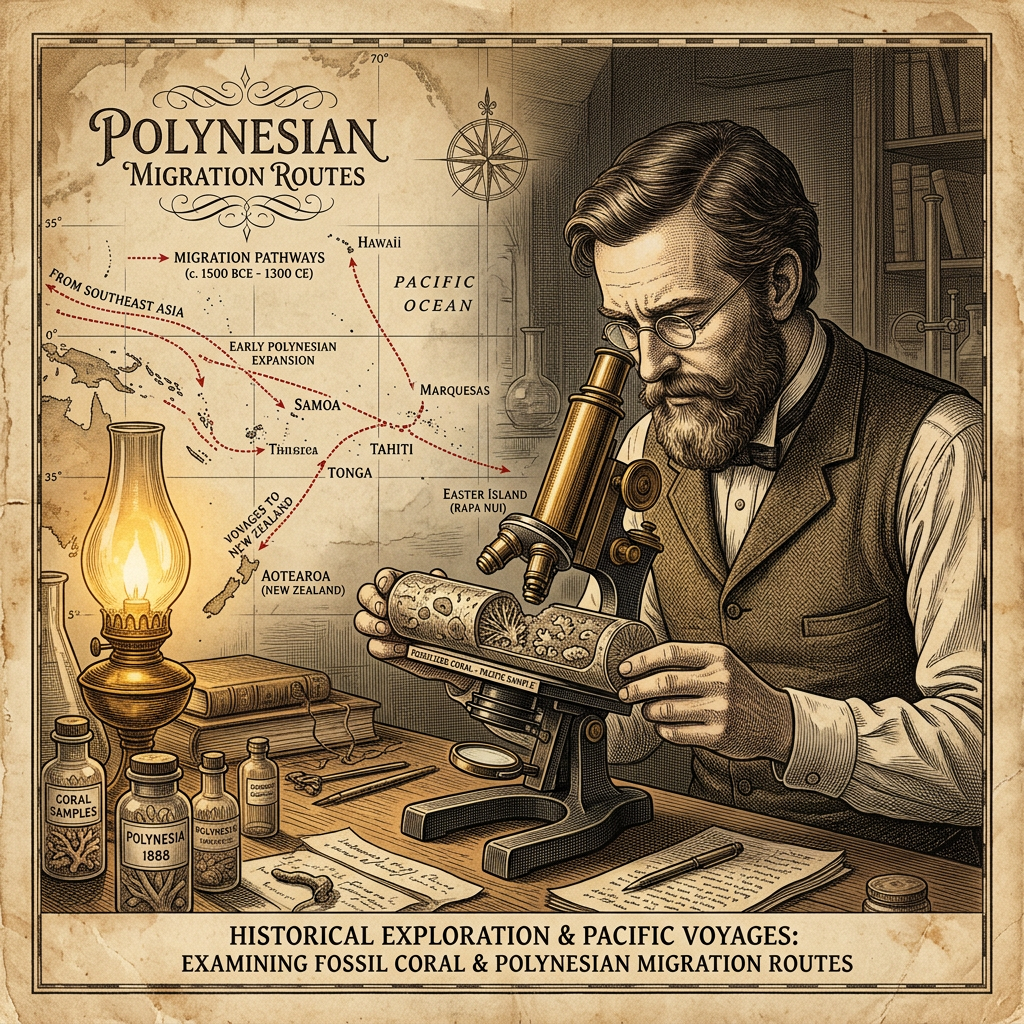
Researchers using high-resolution geochemical analysis of fossilized coral reefs have uncovered evidence of a centuries-long environmental event known as the ‘Great Pacific Cooling.’ The study indicates that a sudden drop in sea-surface temperatures in the 13th century disrupted traditional fishing grounds and triggered a massive shift in maritime resources across the Central Pacific.
Archaeologists believe this environmental shock was the primary driver behind the final wave of Polynesian long-distance migrations, as communities were forced to seek more stable climates in distant islands such as New Zealand and Hawaii. This study provides a definitive link between paleoclimate volatility and the expansion of one of the world's most successful seafaring cultures, highlighting human resilience in the face of rapid ecological change.