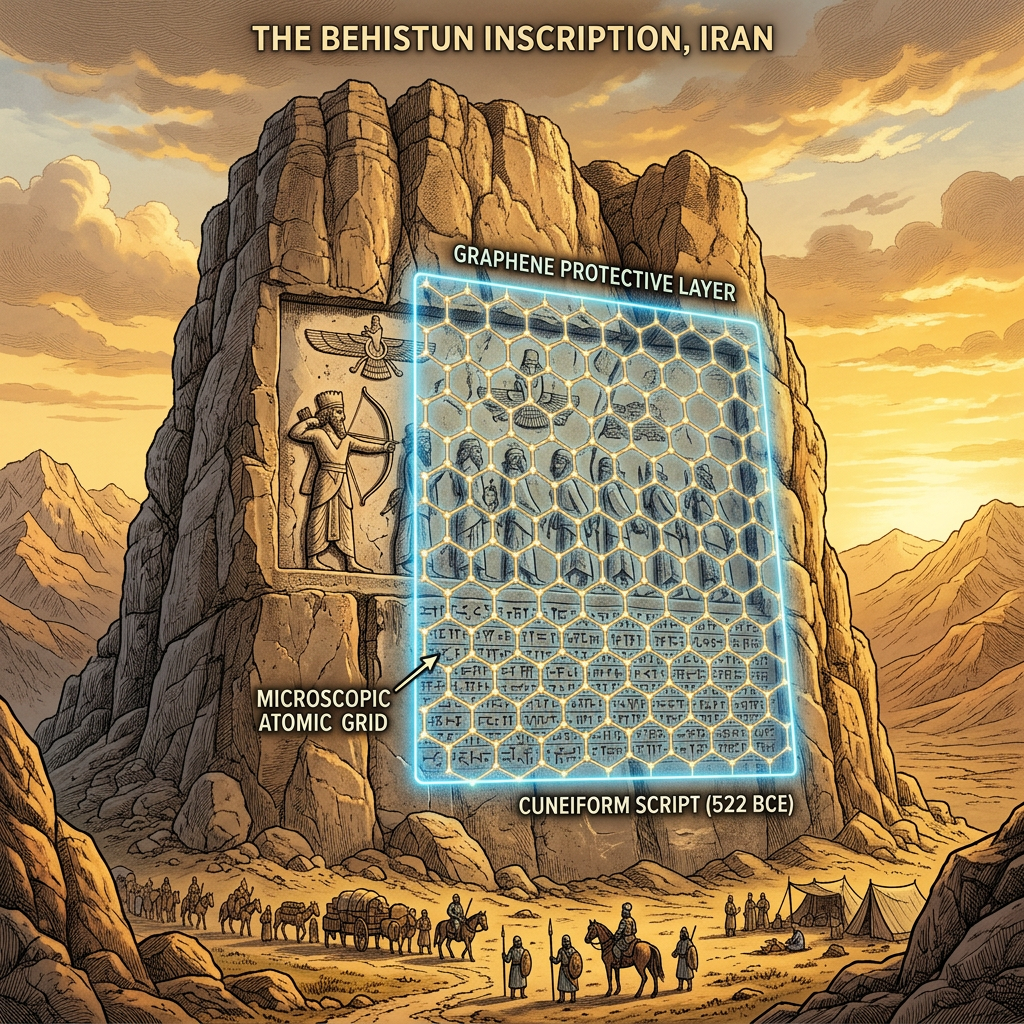
In a major leap for archaeological conservation, engineers have successfully deployed graphene-oxide nanopatches to stabilize rapidly deteriorating inscriptions at the Rock of Behistun in Iran. The UNESCO-listed site, famous for its trilingual cuneiform text, has suffered from significant surface erosion due to extreme temperature fluctuations and environmental pollutants. The new technology involves applying an atomically thin protective layer that bonds with the limestone without altering its visual appearance.
This innovative approach allows the rock surface to 'breathe' while providing a robust barrier against moisture and chemical degradation. Experts state that this method could revolutionize the preservation of outdoor rock art and monumental inscriptions globally, offering a non-invasive solution for heritage sites that were previously considered beyond traditional restoration capabilities.