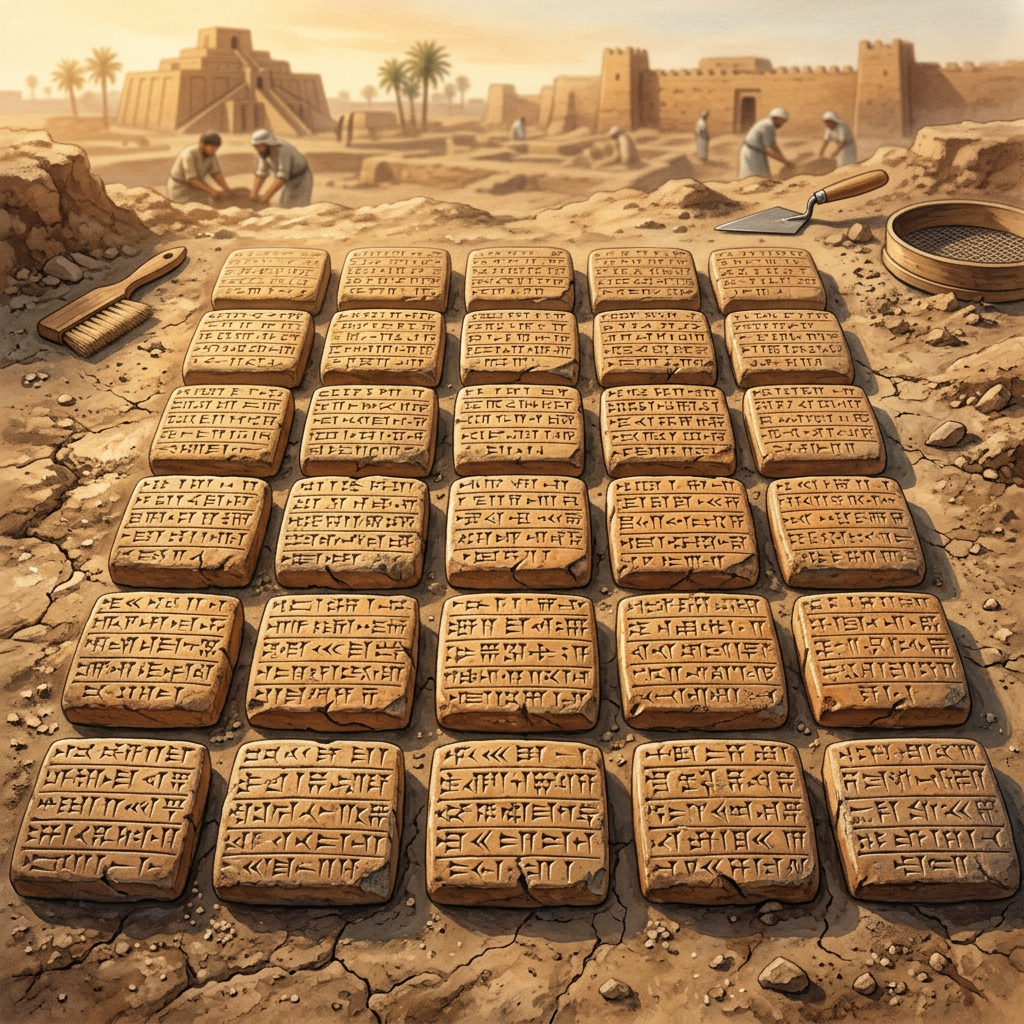
Excavations at a pre-Mauryan site in the Narmada basin have unearthed a cache of clay tablets inscribed with the 'Dharma-Kosa' (Treasury of Righteousness). These 5th-century BCE artifacts outline a proto-Vedic philosophy of Stewardship, where the wealth of the earth is viewed as a sacred trust held by the community rather than private property.
The tablets detail the Niyama (observances) required for those managing natural resources, emphasizing that the 'rhythm of the river' must dictate the pace of human consumption. This find provides archaeological evidence for a highly sophisticated environmental ethic during the late Vedic period, challenging the notion that resource management is a purely modern concern.