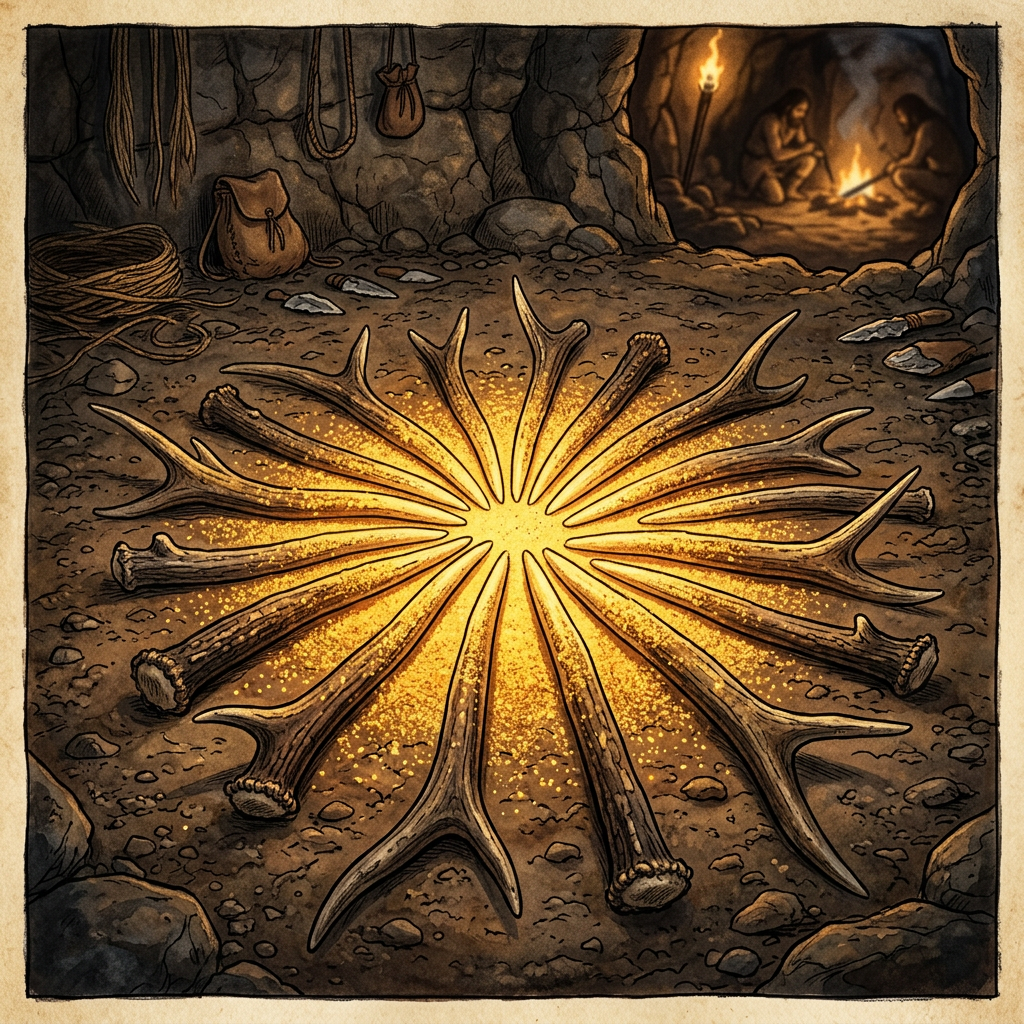
Excavations at a Neolithic coastal site in Jutland, Denmark, have revealed a cache of red deer antler picks covered in a fine layer of crushed amber dust. The tools were discovered arranged in a circular pattern around a central hearth, buried alongside hundreds of fossilized sea urchins, which were often viewed as sacred symbols of the sun.
The site is believed to be a dedicated space for Spring-Tide celebrations, where ancient coastal communities gathered to welcome the return of migratory birds and the receding winter ice. This discovery provides a rare glimpse into the sensory nature of prehistoric Nordic festivals, where the golden glow of amber was used to simulate sunlight during twilight rituals.