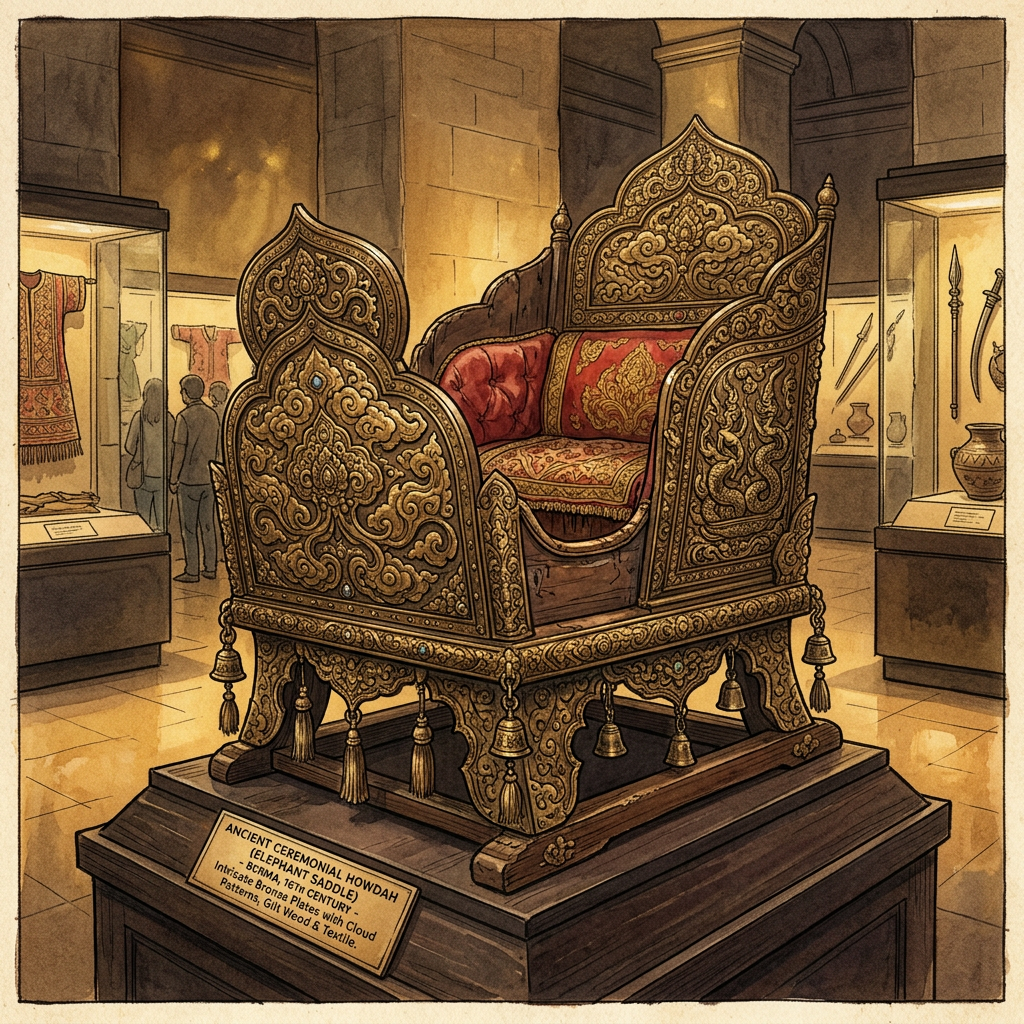
A joint international team in the Bolaven Plateau of southern Laos has unearthed decorative bronze plates once used as ritual elephant saddles, dating to the 6th century. These artifacts were found at a site featuring elaborate stone-lined channels designed for ceremonial water pouring, predating the regional adoption of Theravada Buddhism.
Researchers believe these findings represent the earliest physical evidence of the Pi Mai (Lao New Year) agricultural roots. The saddles feature motifs of rain-bearing clouds and river spirits, suggesting that elephants played a central role in ancient processions intended to summon the monsoon rains and bless the local community's crops.