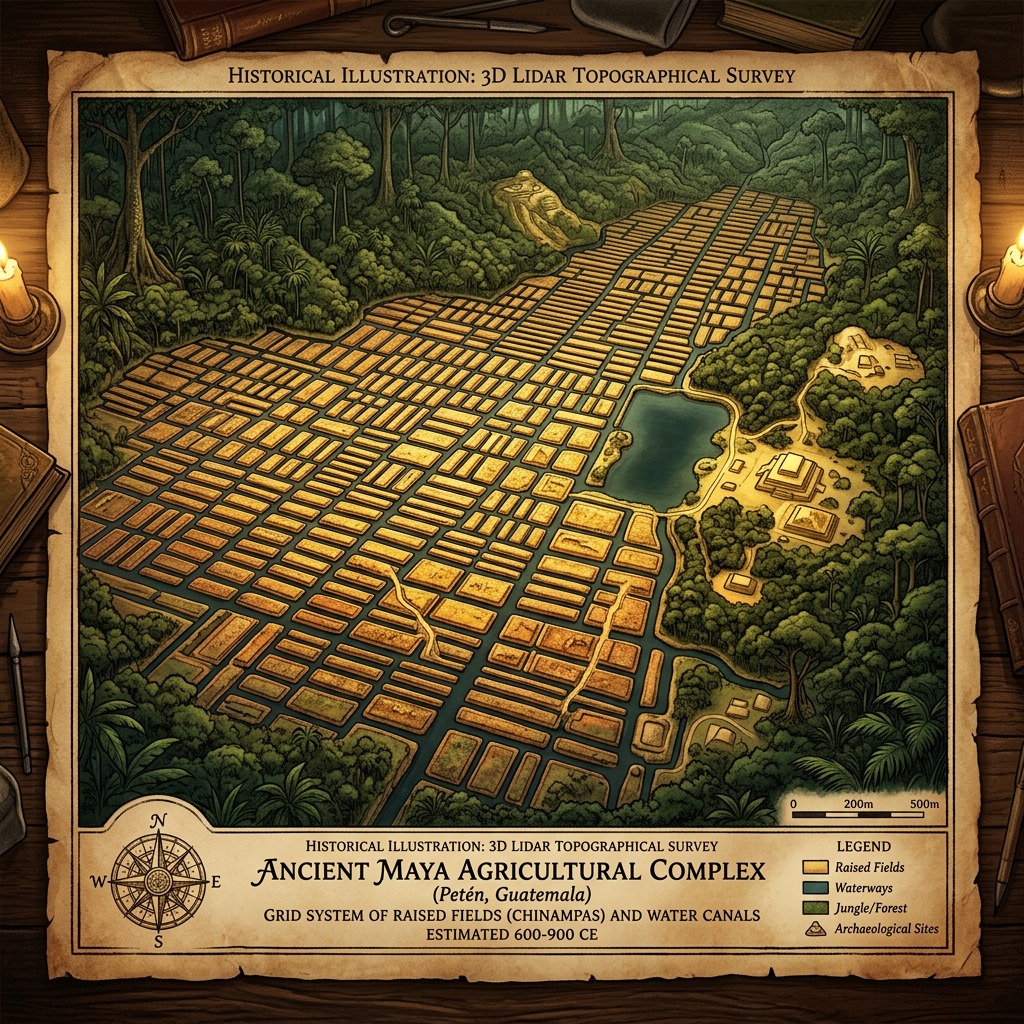
A new LiDAR survey in the San Jorge River basin of Colombia has revealed the sprawling remains of a previously unknown Zenú garden-metropolis dating back to 500 CE. The data shows a complex network of thousands of small artificial islands, or camellones, used for intensive aquaculture and agriculture, surrounding a central ceremonial core with three massive earthen pyramids.
The Zenú people were master hydraulic engineers, and this newly discovered site demonstrates an unprecedented scale of environmental modification. The 'garden-metropolis' supported a population density far higher than previously estimated, utilizing a sustainable system of water management that protected the urban center from seasonal flooding while ensuring year-round food security.