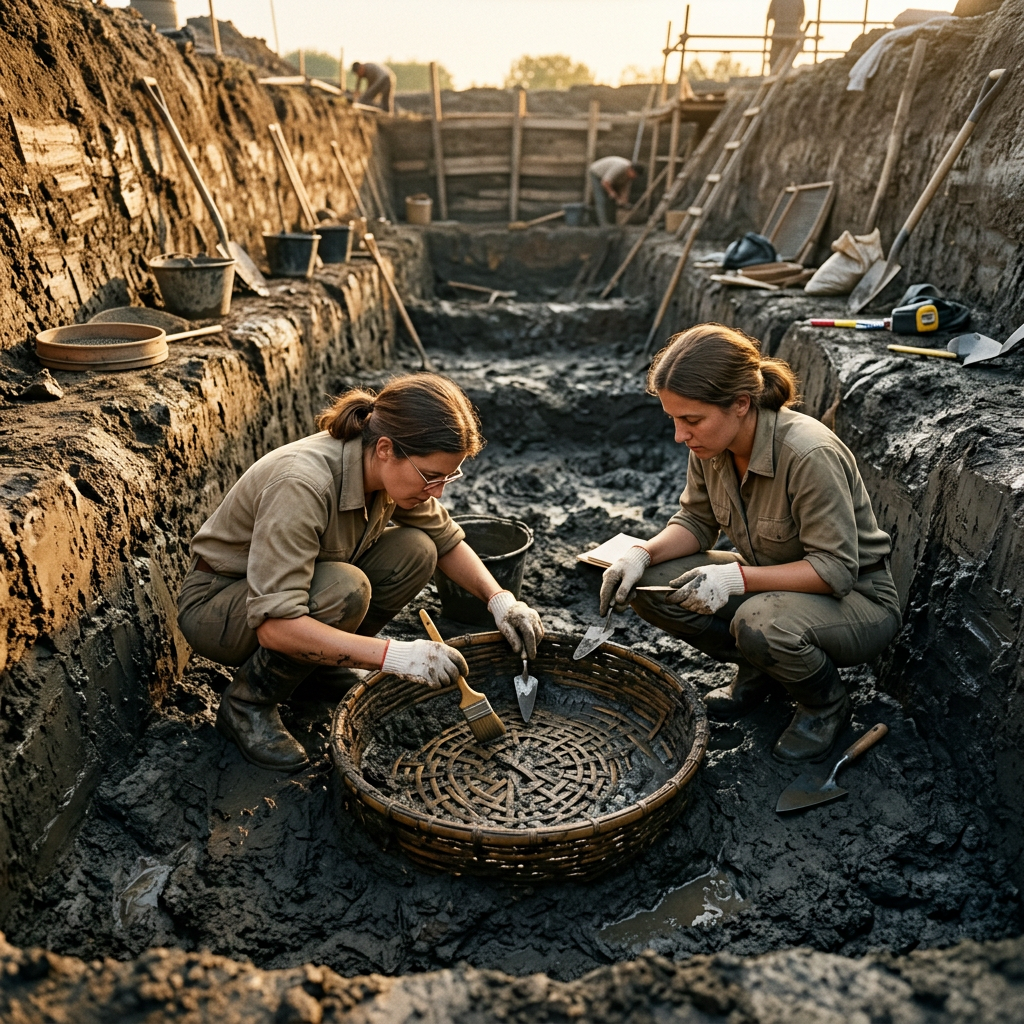
Excavations at the Liangzhu world heritage site in Zhejiang Province have led to the discovery of remarkably well-preserved woven-bamboo granary linings dating back 5,000 years. These linings were used within large subterranean pits to create a breathable, pest-resistant environment for the storage of surplus rice. The preservation of the organic fibers is attributed to the unique anaerobic conditions of the waterlogged soil in the Yangtze River Delta.
The Zhejiang Provincial Institute of Cultural Relics noted that the weave patterns are surprisingly complex, utilizing a multi-layered technique that provided both structural support and insulation against ground moisture. This finding proves that the Liangzhu people had mastered advanced textile and basketry techniques to support their large-scale sedentary civilization and complex grain-distribution systems.