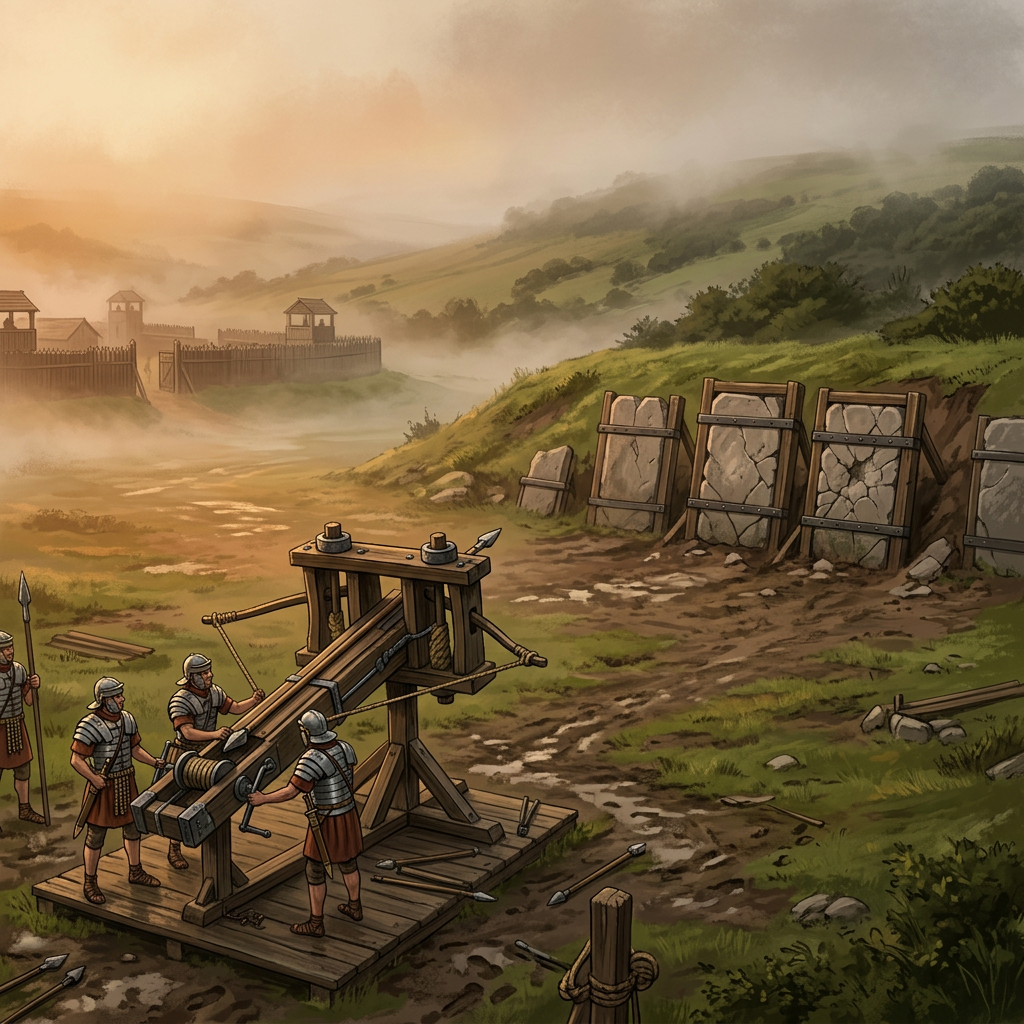
In a groundbreaking discovery near Hadrian's Wall in Cumbria, researchers have identified a series of 2nd-century Roman 'artillery impact pavements.' These heavy stone surfaces were specifically engineered to withstand the impact of ballista bolts and catapult stones during live-fire military trials. The site is believed to be a specialized proving ground where Roman engineers tested the range and velocity of torsion engines before deploying them to frontier fortifications.
Evidence of shattered stone projectiles and carbonized wooden target frames were found embedded in the surrounding soil. Experts from Cumbria University suggest that the impact patterns on the pavements demonstrate a highly sophisticated understanding of ballistics and structural durability. This find provides the first physical evidence of a dedicated military testing facility for Roman heavy weaponry in Northern Britain, moving beyond traditional barracks and forts.