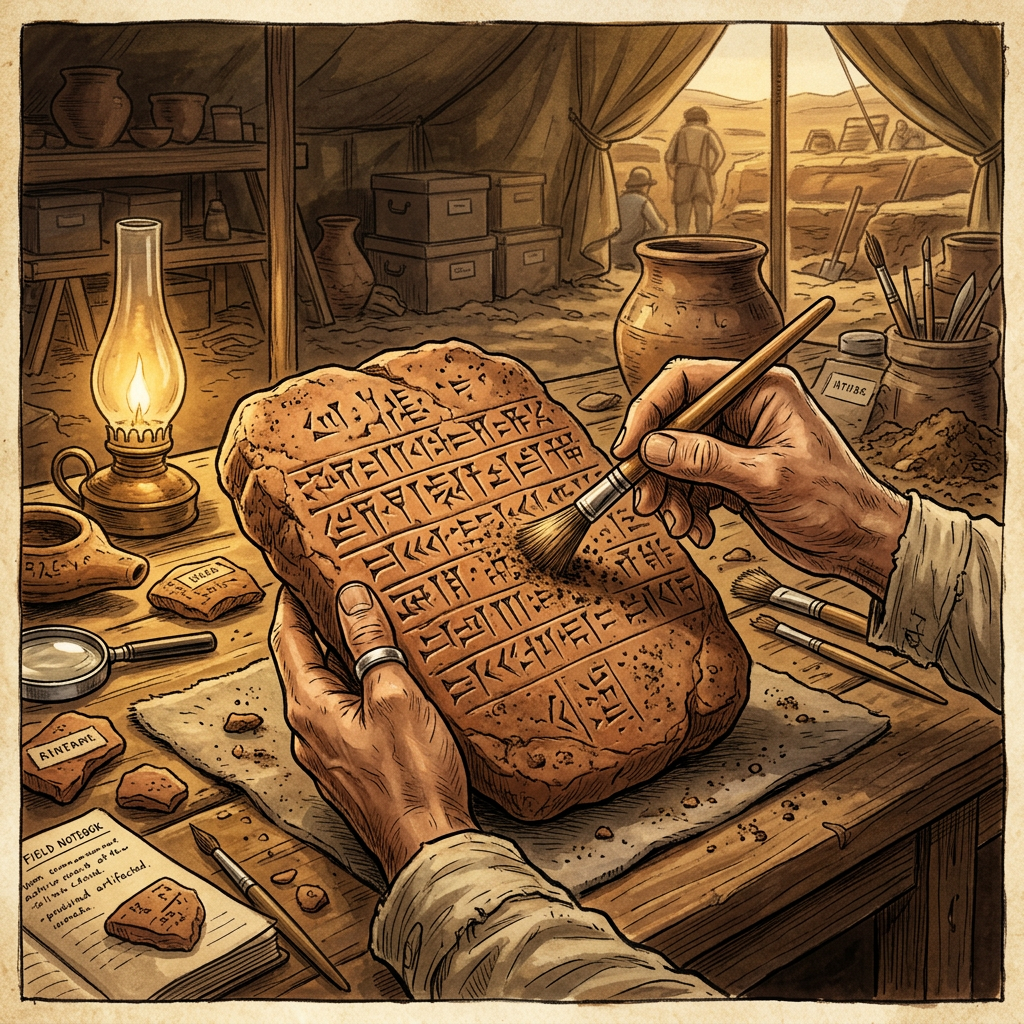
Excavations in the Tapti River basin have unearthed a cache of terracotta tablets dating back to the 6th century BCE. The tablets, inscribed in a proto-Brahmi script, detail the 'Kshama-Kalpa', or the 'Ethics of Forbearance,' which appears to be an early social contract based on the avoidance of cycles of revenge.
Scholars believe these tablets represent a pre-Mauryan attempt to formalize the concept of Dharma as a mechanism for conflict resolution in growing urban centers. The text emphasizes that 'restraint' is the highest form of power, predating similar concepts found in later Upanishadic and Buddhist literatures.