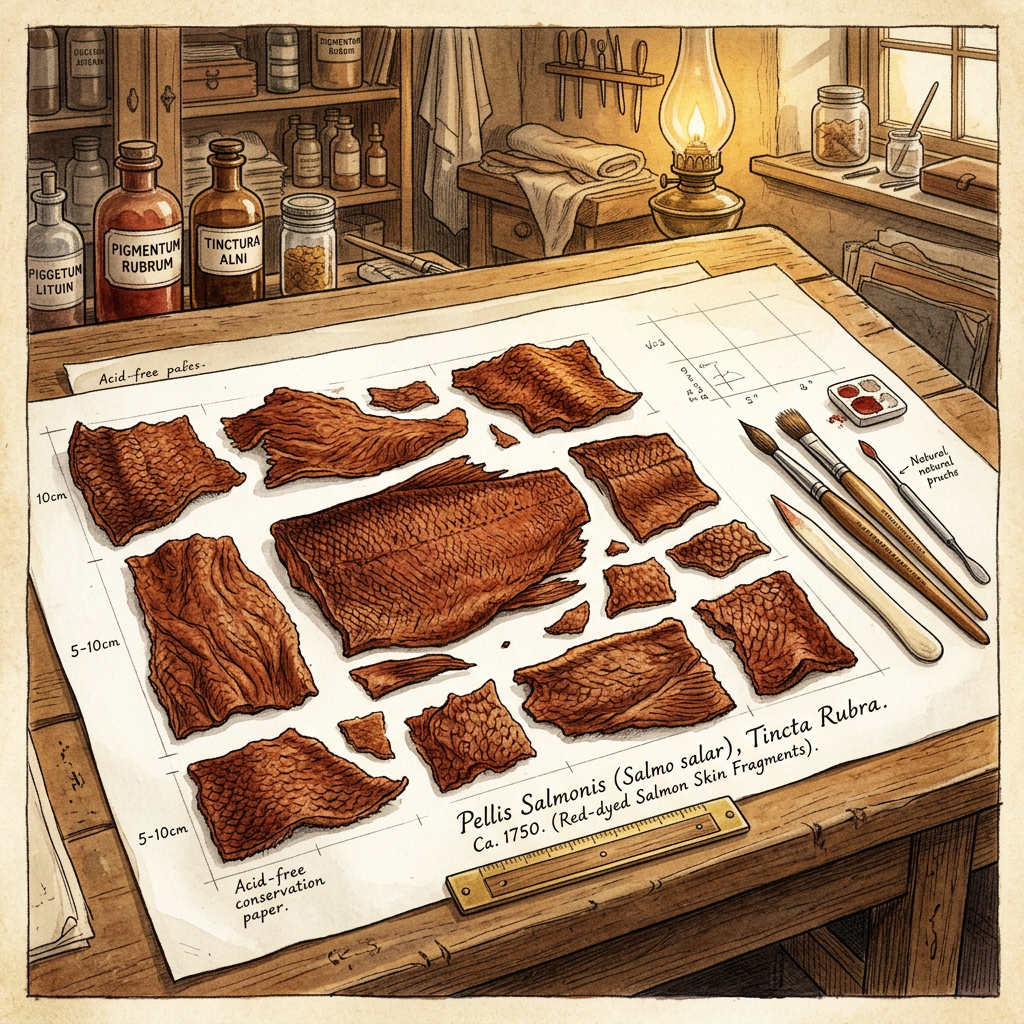
During a rescue excavation in Japan's Aomori Prefecture, archaeologists recovered fragments of garments made from tanned salmon skin treated with bright red cinnabar. The garments were found in a ceremonial pit alongside high-quality obsidian blades, dating to the Middle Jomon period.
Experts suggest these robes were worn by ritual leaders during 'River-Arrival' festivals, which celebrated the annual return of salmon to the local waterways. The use of cinnabar—a rare and valuable pigment—indicates that these seasonal events were of paramount spiritual importance to Jomon hunter-gatherer societies, serving as a precursor to indigenous Ainu traditions.