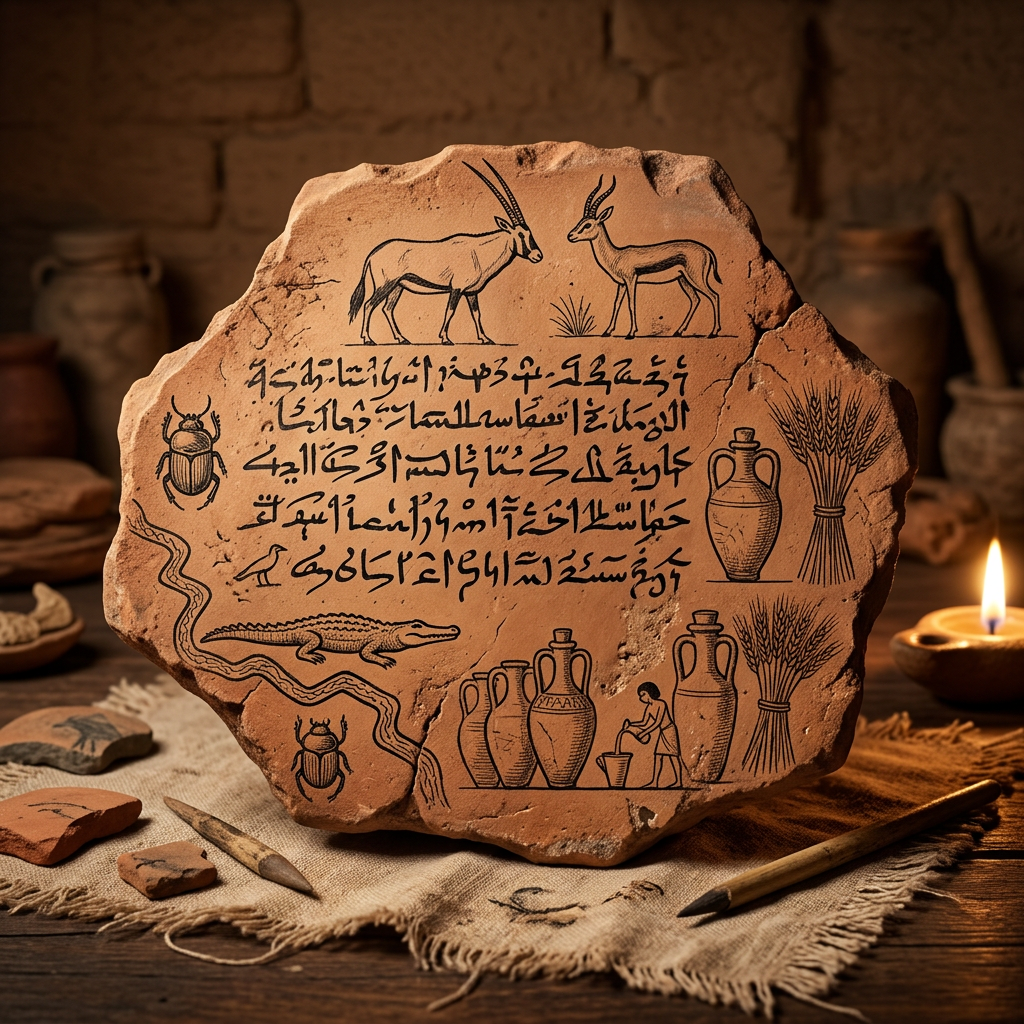
A collection of inscribed pottery shards, or ostraca, found at the artisan village of Deir el-Medina has been translated to reveal the logistics of a previously unknown Egyptian celebration. The texts document extra rations of sweetened bread, dried figs, and beer provided to workers for the 'Festival of the Desert Wind.'
The festival occurred during the transition from the harvesting season to the dry summer, specifically honoring the god Set in his role as a protector of the caravan routes. The records show that even the humblest state workers were granted days off and luxury goods to participate in local street dances and offerings, highlighting the social cohesion provided by these ritual breaks.