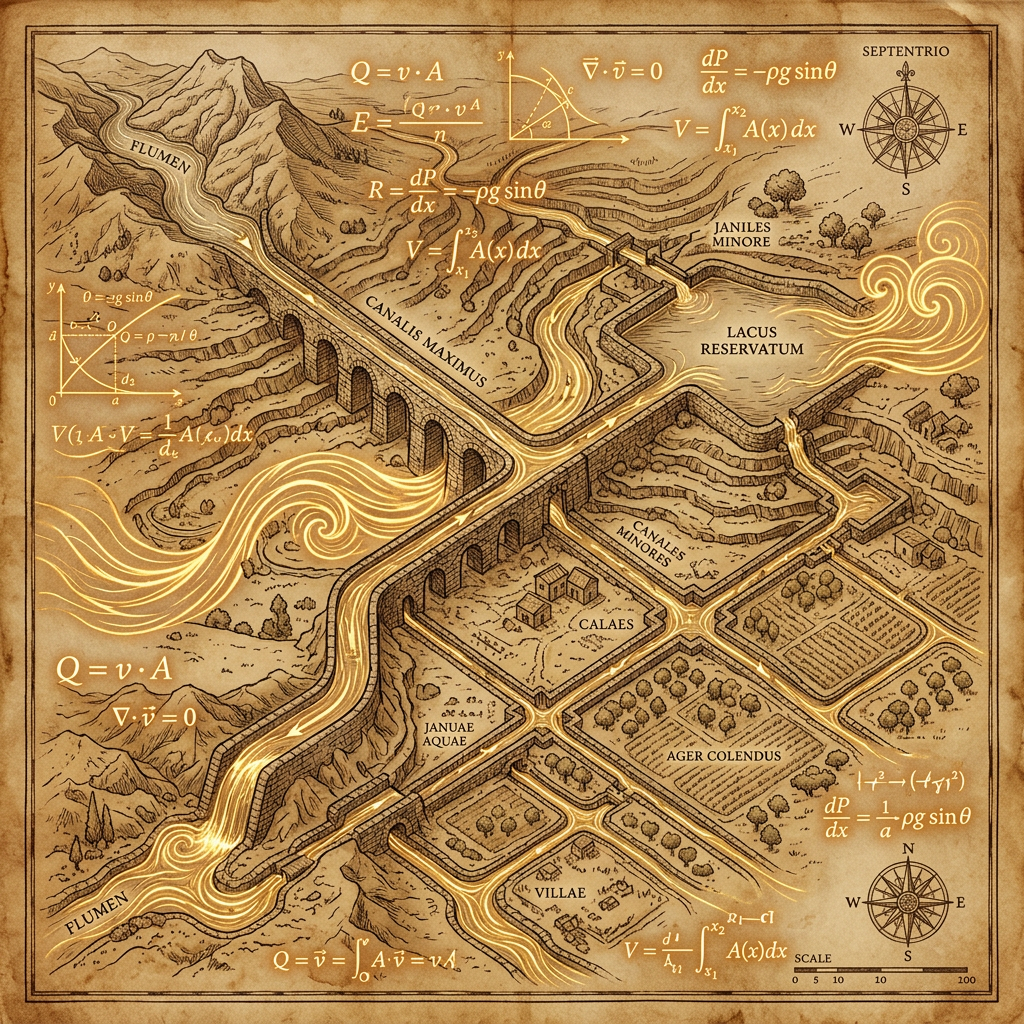
A new study published in the International Journal of Mathematical History has revealed that 10th-century Indian mathematicians developed sophisticated algorithms to model non-linear fluid oscillations. By analyzing a rare commentary on the Ganita-Muktavali, researchers found mathematical proofs for calculating the wave-force exerted on irrigation sluices and dam foundations. These algorithms utilize early forms of iterative approximation that predate European fluid dynamics concepts by several centuries.
The research team, consisting of mathematicians and hydraulic engineers, translated several previously unstudied Sanskrit formulas that describe the resonant frequency of water in open-channel systems. These models were likely used to optimize the design of the massive irrigation networks of the Chola and Rashtrakuta empires. According to Professor Rajesh Varma, the study proves that medieval Indian science had a rigorous theoretical basis for civil engineering that went far beyond mere empirical trial-and-error.