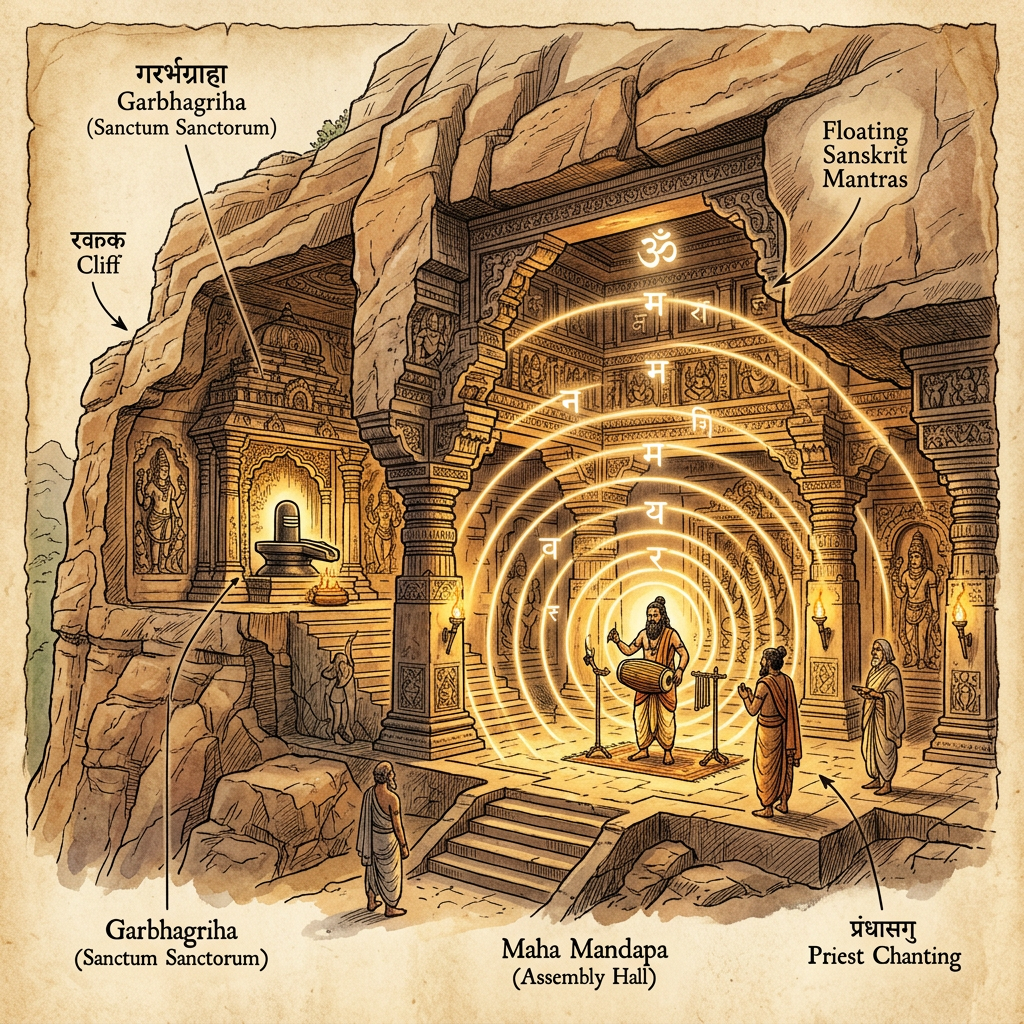
The Heritage Digital Lab has announced the successful decipherment of a set of 7th-century copper plates found beneath a temple in central India. The plates, inscribed in a rare 'Box-Headed' variant of the Brahmi script, contain a series of lost Sanskrit treatises on the physics of acoustic resonance. The texts provide specific mathematical ratios for the excavation of subterranean chambers designed to amplify or dampen specific sound frequencies, primarily for use in ritual chanting and meditation.
The AI-assisted analysis revealed that the ancient architects used a system of harmonic proportions based on the prime-number series to ensure that sound waves would propagate without interference in enclosed granite environments. This scientific approach to architecture explains the exceptional acoustic clarity found in several contemporaneous rock-cut caves. The discovery provides a technical manual that bridges the gap between Vedic ritual theory and the practical engineering of the early medieval period.