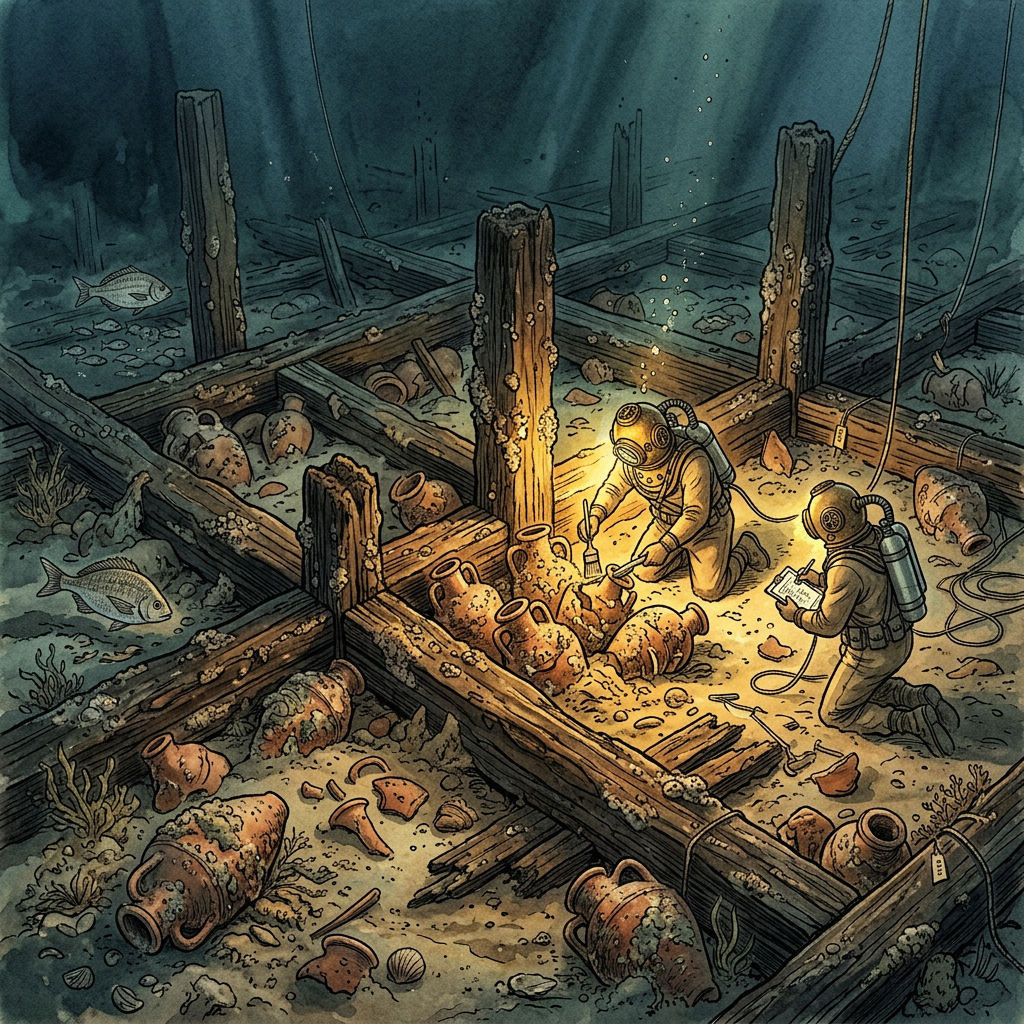
Archaeologists using advanced marine LiDAR and sonar technology have identified a significant 1st-century Roman industrial port submerged off the coast of the Istrian Peninsula in Croatia. The site features the remarkably well-preserved remains of massive timber warehouses, which were protected from decay for two millennia by the unique anoxic conditions of the Adriatic seabed's sediment layers.
The discovery includes foundational stone piers and over 30 intact wooden storage structures that once held Mediterranean commodities such as olive oil, wine, and salted fish. Preliminary excavations have yielded a wealth of terracotta amphorae and specialized iron tools, suggesting the port served as a major regional export hub for the Roman Empire's northern provinces during the reign of the Julio-Claudian dynasty.