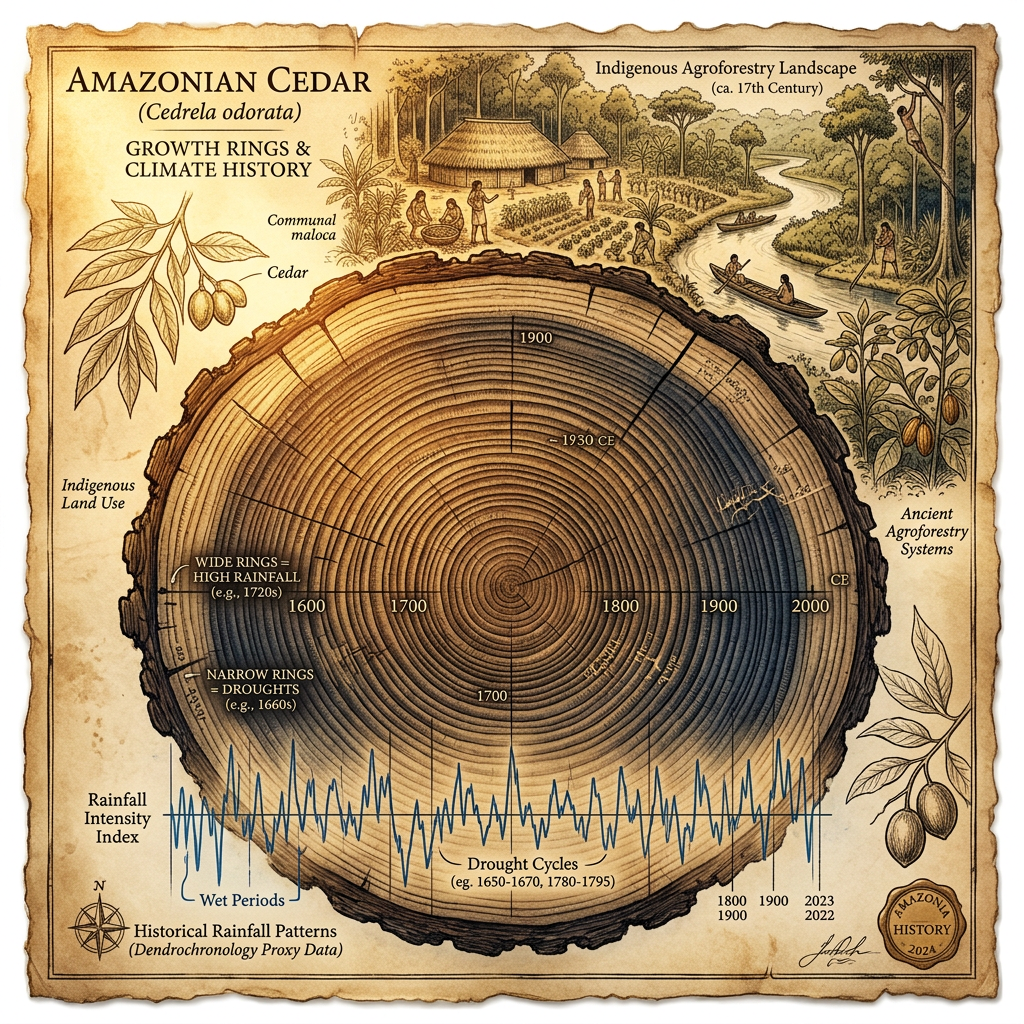
A groundbreaking study published in Nature has revealed how pre-colonial societies in the Amazon Basin managed extreme climate variability. By analyzing the tree rings of ancient cedar trees (Cedrela odorata) found in the Upper Amazon, researchers have reconstructed a high-resolution climate record spanning eight centuries. The data indicates that indigenous communities successfully navigated multiple 'mega-droughts' through the implementation of sophisticated agroforestry systems.
The research demonstrates that these ancient systems utilized controlled flooding and polyculture techniques to maintain soil moisture during prolonged dry spells. Unlike modern monoculture, these historical landscapes were engineered to be resilient, integrating fruit-bearing trees with seasonal crops in a way that buffered the impacts of shifting rainfall patterns. This discovery challenges previous assumptions about the vulnerability of ancient Amazonian civilizations to environmental collapse.