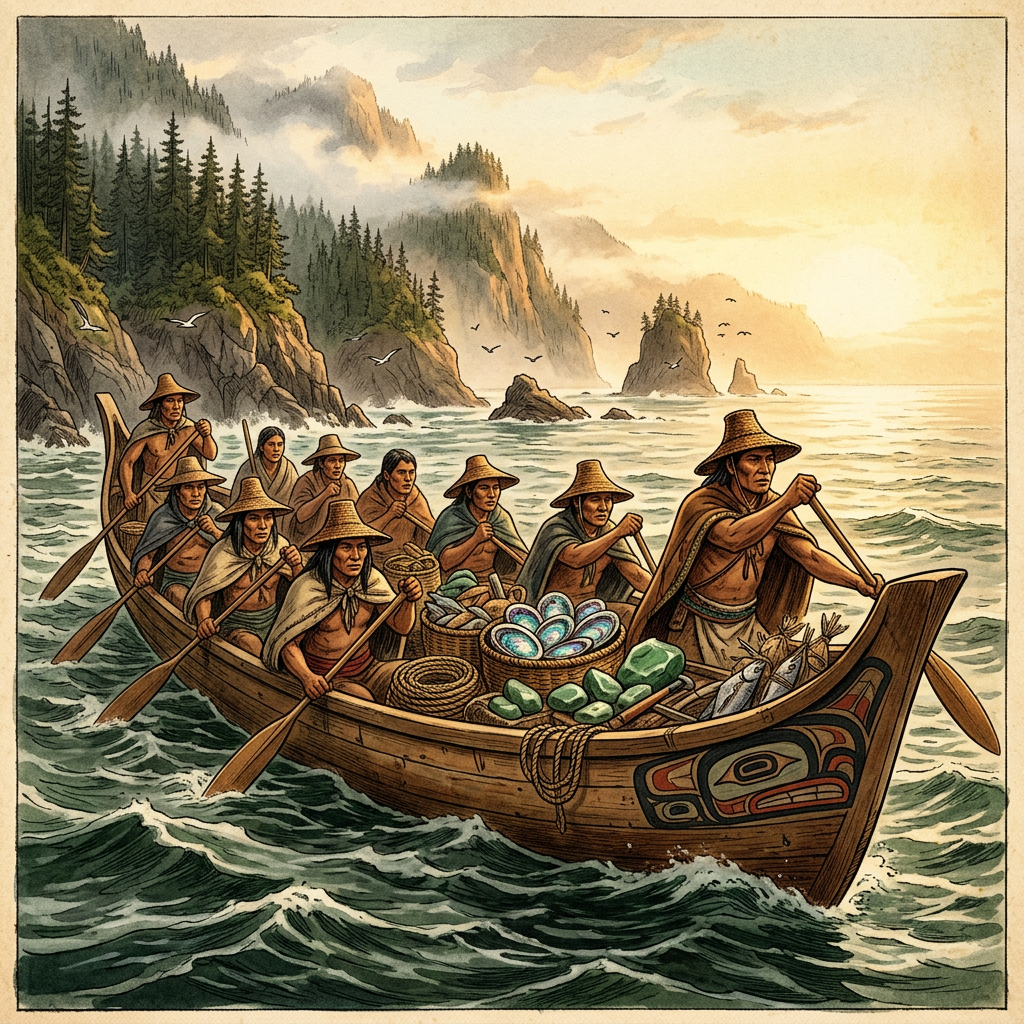
Archaeologists have identified a significant prehistoric maritime trade network dubbed the 'Abalone and Jadeite' Seaway, linking the Channel Islands off California to the western coast of Mexico. By analyzing the chemical signatures of shell ornaments and jadeite tools found in coastal burials, researchers determined that indigenous mariners traveled over 1,500 miles using sophisticated plank-built canoes. This discovery significantly pushes back the timeline for organized long-distance maritime exchange in the eastern Pacific.
The study reveals that high-status goods, including iridescent abalone shells and green jadeite, were traded for ritual purposes and social signaling. Isotopic analysis of the artifacts suggests a highly organized logistical system that relied on seasonal ocean currents. This research highlights the maritime prowess of ancient coastal societies and their role in shaping the cultural landscape of North and Central America long before the arrival of Europeans.