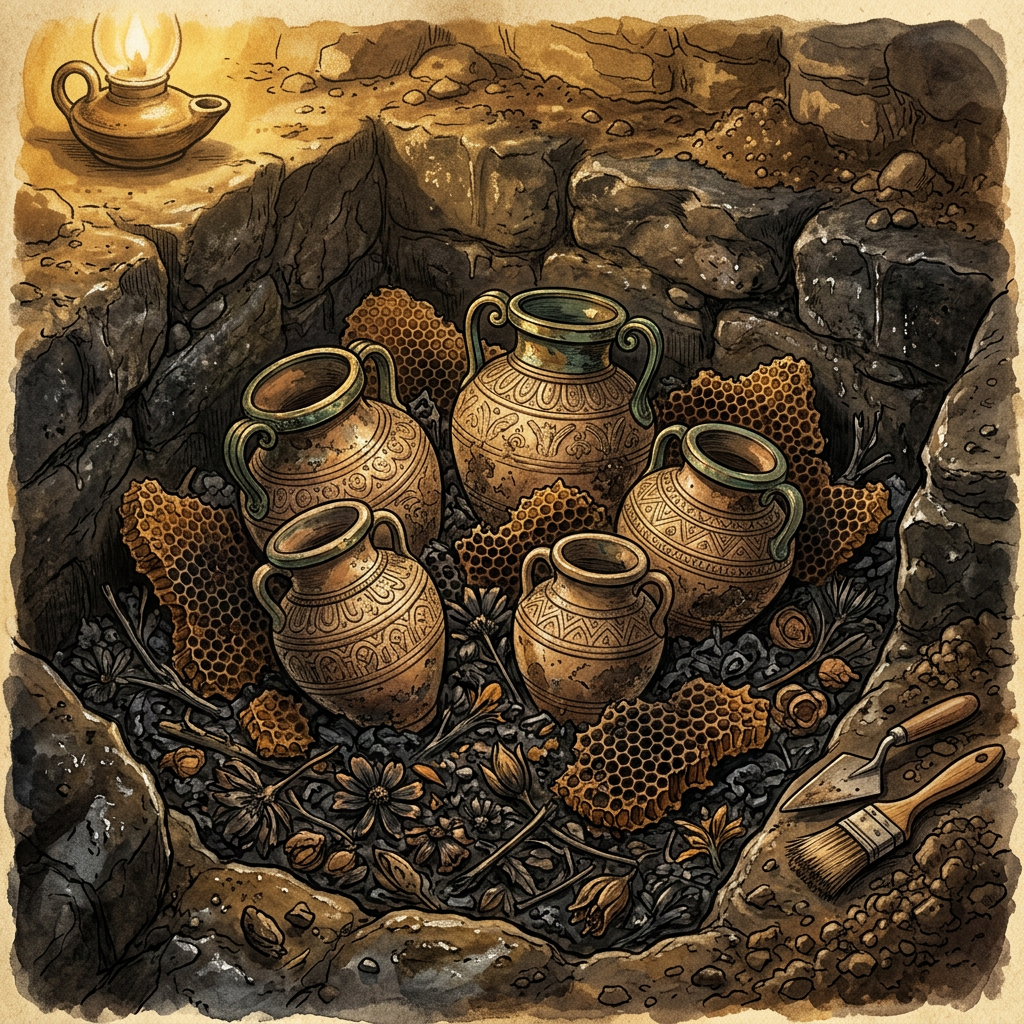
New excavations at a rural sanctuary in Cyprus have revealed 3,000-year-old bronze-mounted saffron jars, providing evidence for early Mediterranean floral festivals. Chemical analysis of the vessels' interior revealed high concentrations of Crocus sativus residue, alongside remains of honey cakes and wine jars.
This ritual site was likely the center of an annual "Festival of the First Harvest," where local communities gathered to honor deities of growth and renewal. The discovery highlights the deep economic and spiritual importance of saffron in the ancient Levantine world as a ceremonial pigment and offering.