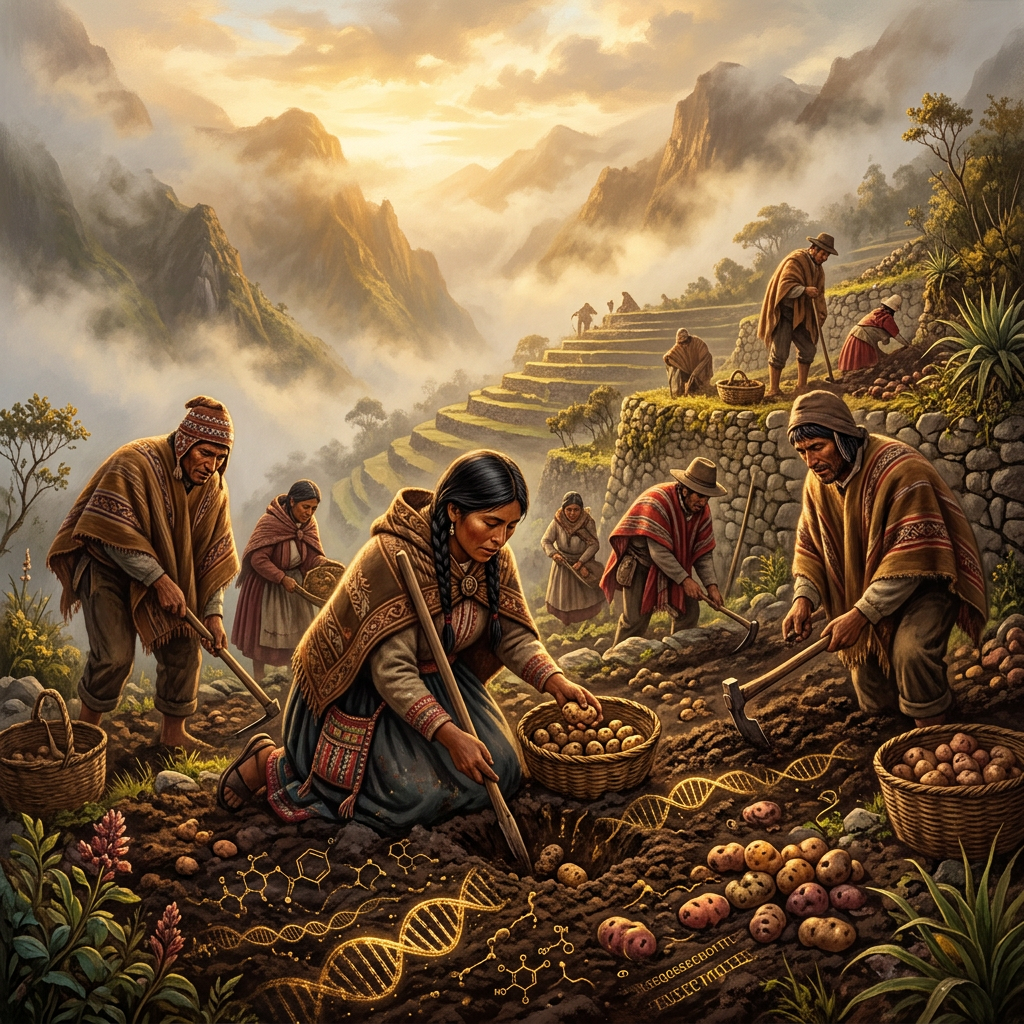
A genomic study published in Nature Genetics has identified specific genetic adaptations in 8,000-year-old remains found in the high-altitude Andes. Researchers discovered evidence of natural selection in the AMY1 gene complex, which is specifically adapted to process the high-starch content of early domesticated potatoes. This research suggests that the dietary transition to tubers was a critical factor in the survival and expansion of early Andean civilizations.
The study utilized paleogenomic sequencing to compare ancient hunter-gatherers with early agriculturalists, revealing a rapid shift in enzymatic production linked to the domestication of wild potato species. This selection pressure highlights how ancient populations in South America successfully adapted their biology to extreme montane environments and new food sources long before the rise of the Inca Empire.