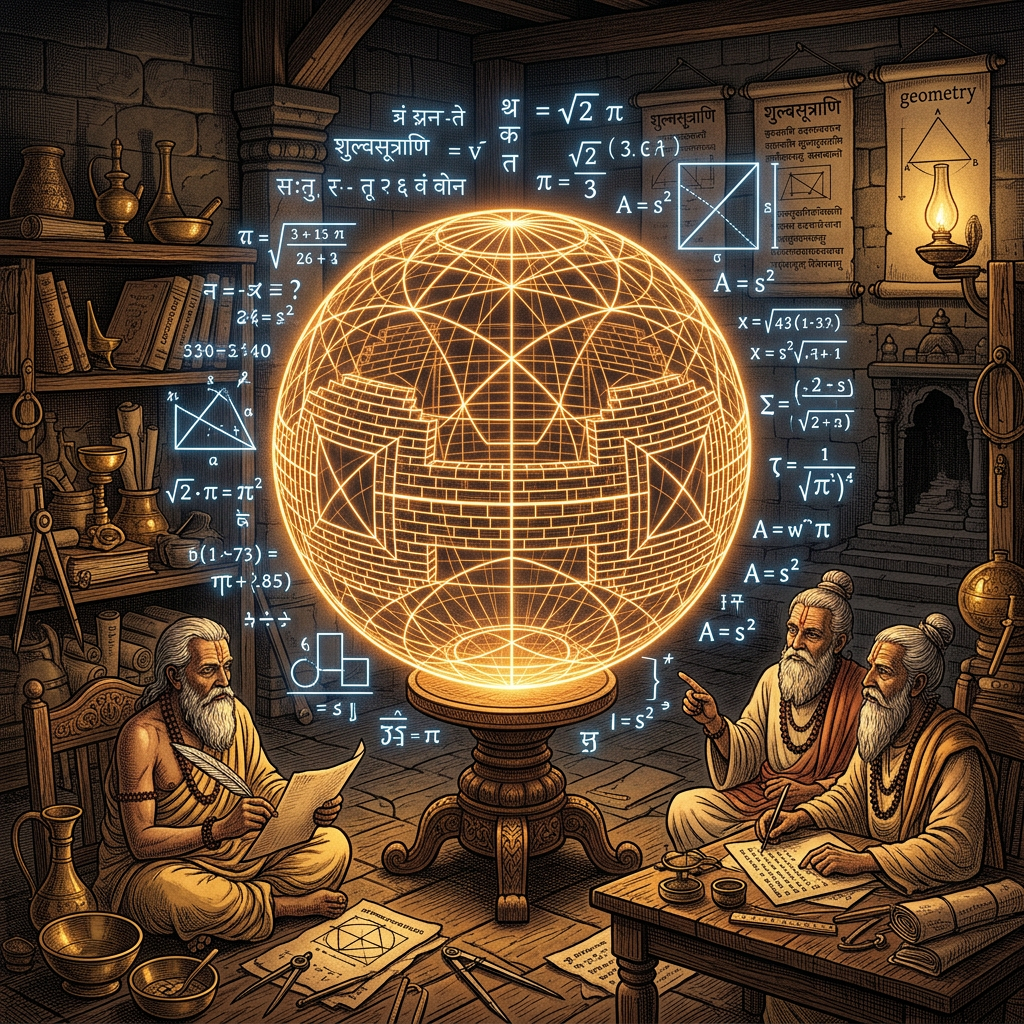
Computational analysis of the Baudhayana Sulba Sutra has revealed that ancient Vedic mathematicians possessed sophisticated algorithms for approximating the surface area of a sphere. The study, published in the International Journal of Sanskrit Research, demonstrates that the recursive geometric proofs described in the text yield results with a precision that rivals modern calculus-based approximations.
Researchers used AI to model the architectural layout of fire altars described in the sutras, finding that the construction methods required a fundamental understanding of non-Euclidean geometry. This discovery suggests that the mathematical frameworks for modeling curved surfaces in India predate similar developments in other civilizations by several centuries, providing a new perspective on the history of global mathematics.