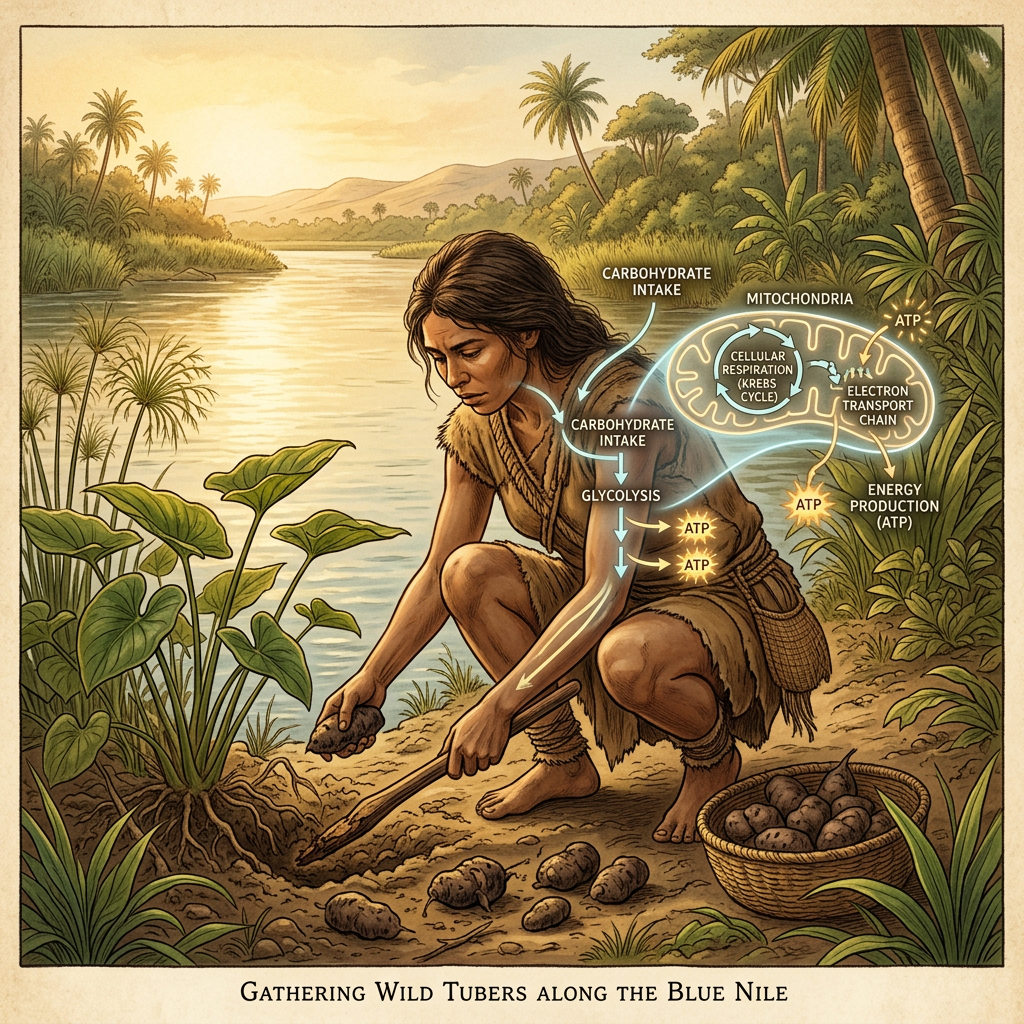
Researchers at the National Academy of Sciences (PNAS) have analyzed the genomes of 12,000-year-old human remains from the Blue Nile Basin, identifying the earliest known genetic markers for high-oxalate dietary adaptation. This biological shift allowed early hunter-gatherers to safely consume large quantities of wild tubers and riverine flora that were naturally high in calcium-binding oxalates.
The study found specific variations in the HOGA1 and AGXT genes, which provided these ancient populations with resistance to the formation of kidney stones despite their specialized diet. This research provides critical evidence for how early humans in Northeast Africa biologically pivoted to exploit specific ecological niches during the transition out of the Pleistocene epoch.