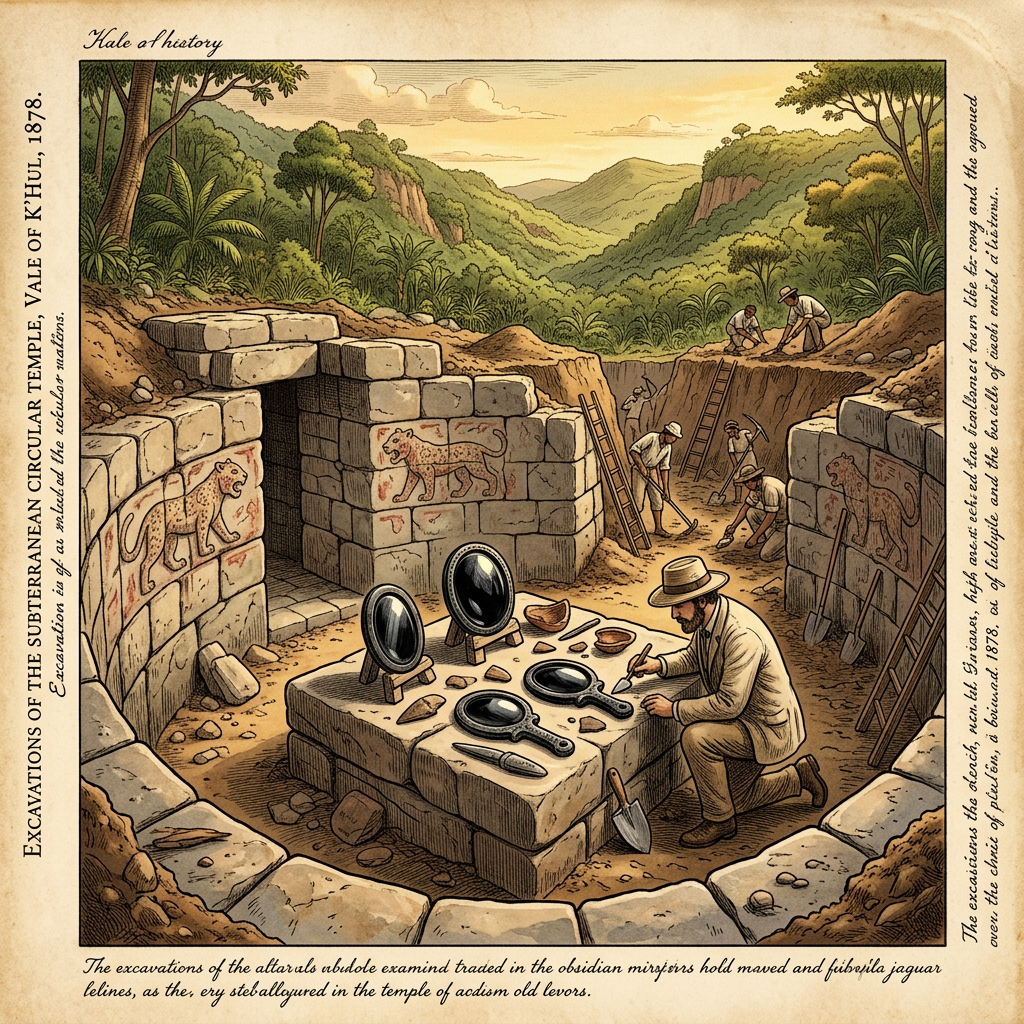
Archaeologists working in the remote Huallaga Valley of Peru have announced the discovery of a remarkably preserved ceremonial center dubbed the Temple of the Obsidian Shaman. Dating back to approximately 800 BCE, the structure features a unique subterranean circular court constructed from finely polished river stones and an upper platform housing three sealed ritual chambers. Inside these chambers, researchers found several large obsidian daggers and ritual mirrors, suggesting the site was a focal point for divination and lithic craftsmanship during the late Formative period.
The most striking feature of the temple is a series of bas-relief carvings depicting figures in trances, adorned with avian and feline attributes. These carvings retain traces of cinnabar and hematite pigments, offering a rare glimpse into the polychromatic aesthetics of pre-Chavin societies. Lead researcher Dr. Elena Valenzuela noted that the temple's orientation aligns perfectly with the rising of the Pleiades, indicating the high importance of celestial observation in the spiritual lives of the ancient inhabitants.