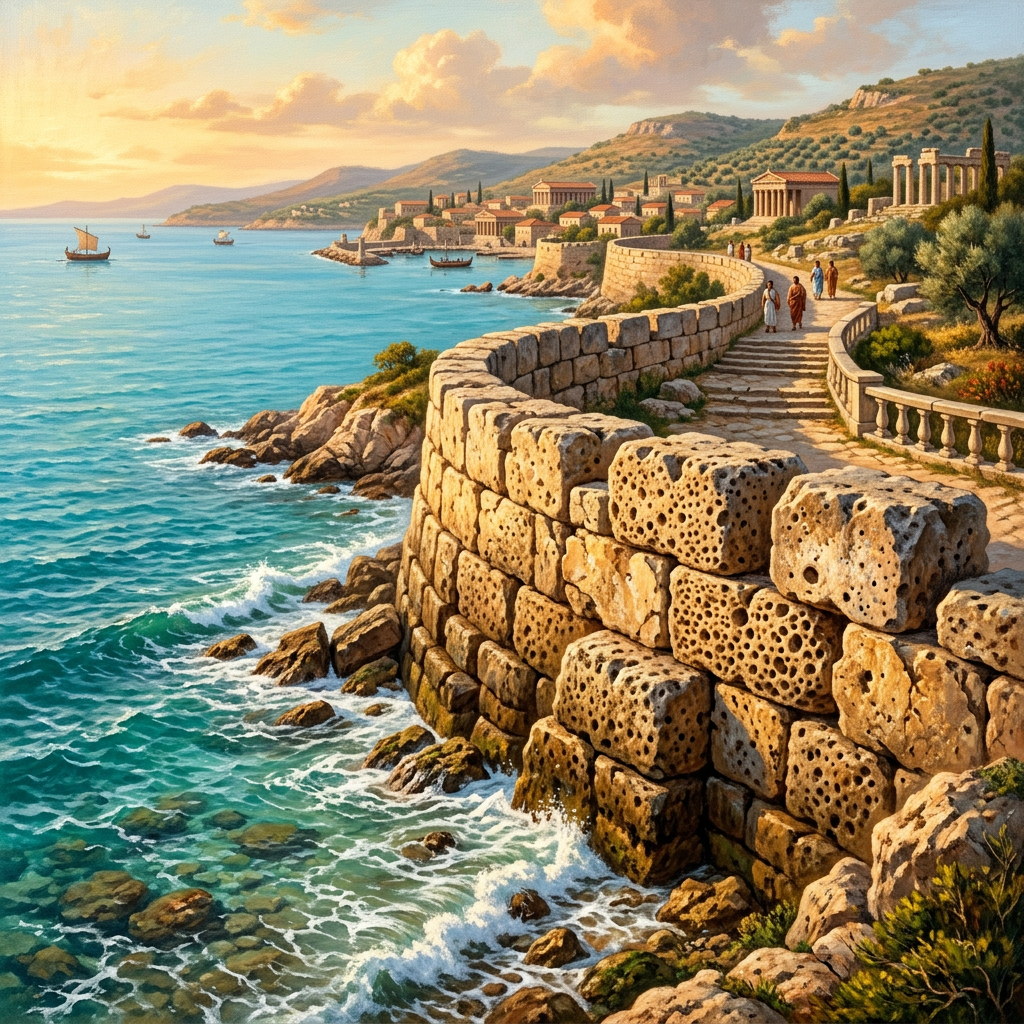
UNESCO has granted a newly created 'Heritage Resilience' designation to the 2,000-year-old 'sponge-stone' sea walls found along the Dalmatian Coast of Croatia. These porous limestone structures, originally engineered during the Liburnian and Roman periods, have been found to significantly mitigate the impact of modern sea-level rise by absorbing and diffusing wave energy without the erosive backwash typical of concrete barriers.
The award recognizes the historical engineering wisdom of the Adriatic coast as a model for modern climate adaptation. UNESCO is now funding a project to integrate these ancient porous designs into contemporary flood defense strategies for historic Mediterranean port cities. The site serves as a living laboratory for bioclimatic restoration, where ancient stonework supports the growth of protective marine ecosystems.