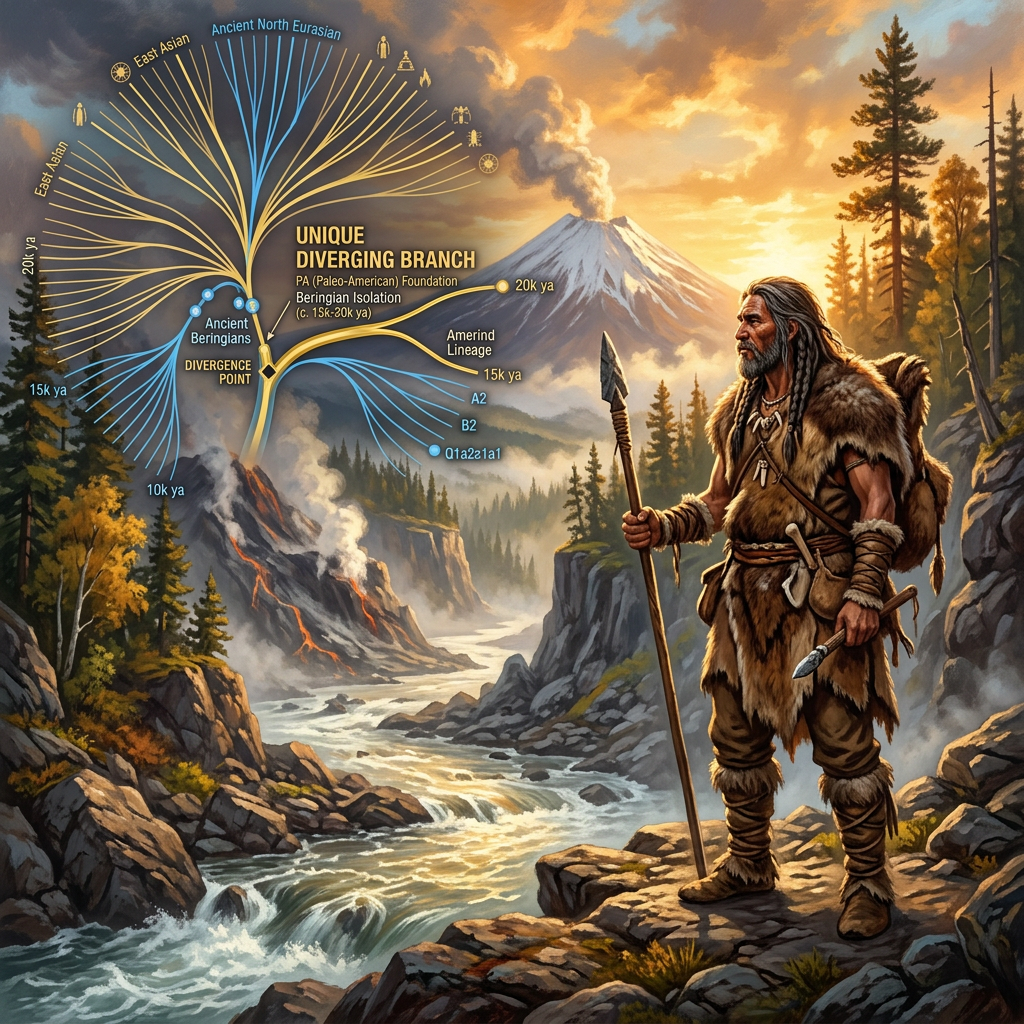
Genomic analysis of a 12,000-year-old skeleton found in the Snake River basin has revealed a distinct, previously unknown 'ghost' lineage of Paleo-Americans. The study, published in PNAS Research, shows that this group diverged from other early migrant populations over 15,000 years ago and developed unique genetic markers for the metabolism of high-alkaline minerals.
This adaptation was likely a response to the specific mineral content of the volcanic riverine ecosystems of the Pacific Northwest. The presence of this lineage suggests that Pleistocene North America was far more genetically diverse than once thought, with isolated groups adapting to hyper-local environmental niches shortly after their arrival on the continent.