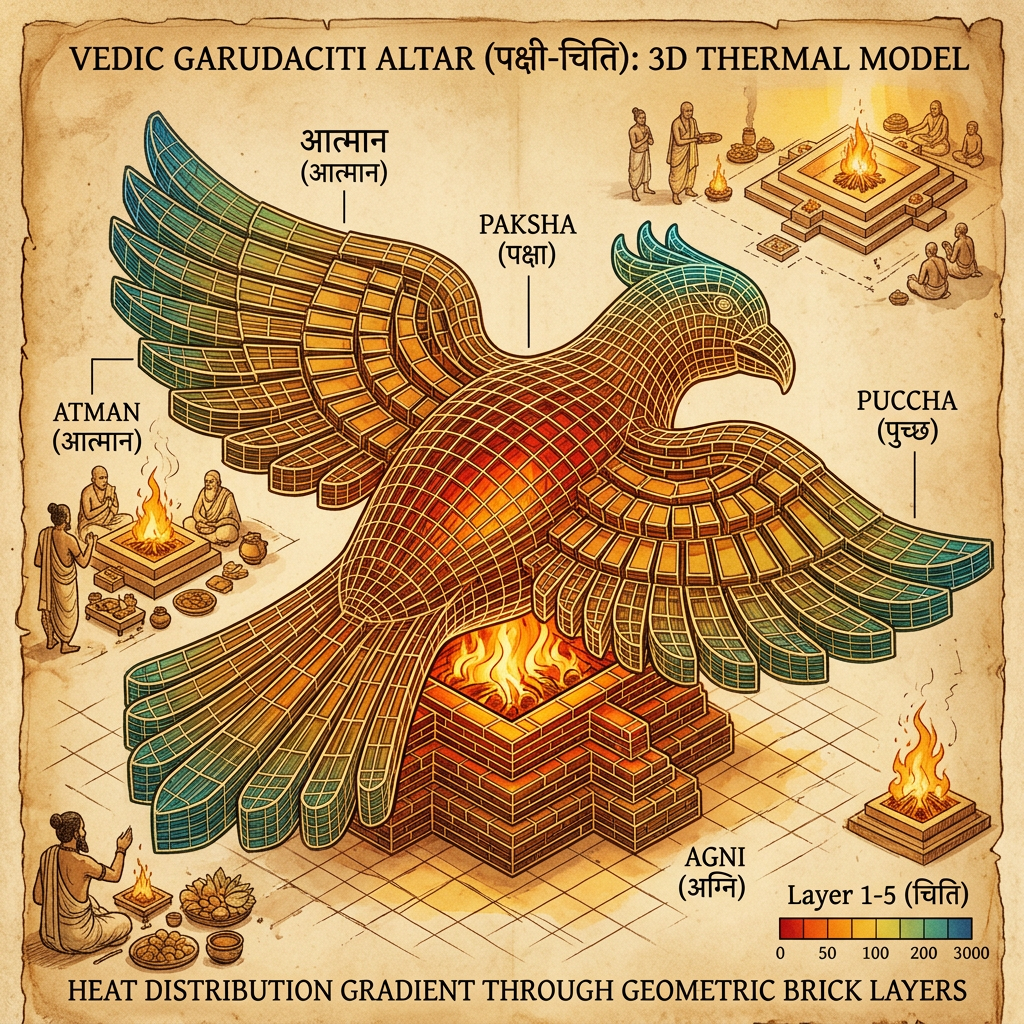
A new mathematical study in the Mathematical Heritage Journal has applied finite element analysis to the geometric descriptions found in the Baudhayana Sulba Sutra. The research found that the specific ratios and material layering prescribed for the construction of Agni-Chayana (fire altars) were optimized to manage non-linear thermal expansion in composite clay structures.
The study demonstrates that the Vedic architects used complex recursive algorithms to determine the placement of 'ishtikas' (bricks) of different sizes to prevent structural cracking during high-temperature rituals. This indicates an advanced understanding of structural thermodynamics and materials engineering in the 1st Millennium BCE, utilizing mathematical constants that predate classical Greek geometry.