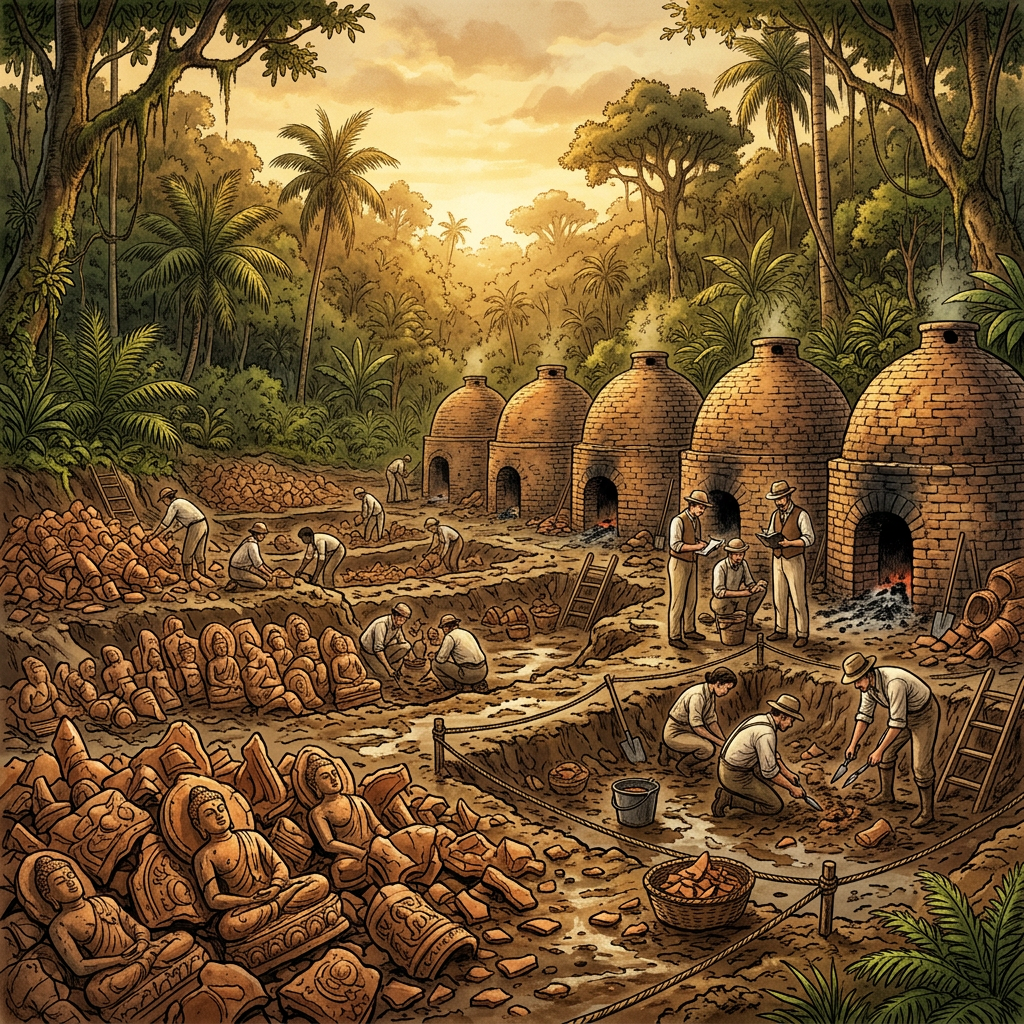
Archaeologists working in the remote, tidal forests of the Sunderbans delta have uncovered a massive Pala-era metallurgical complex that served as a major center for the production of sacred icons and luxury goods. The site features an unprecedented array of over forty intact clay-and-brick kilns and several thousand terracotta casting molds for high-quality bronze statues of Buddhist and Hindu deities.
The scale of the site suggests it was an industrial-level operation designed for international export, likely supplying the kingdoms of Southeast Asia and Tibet. Significant quantities of imported tin from the Malay Peninsula were found on-site, confirming the complex's role in a sophisticated 9th-century global supply chain. This discovery provides the first physical evidence of the 'Industrial Revolution' that powered the artistic explosion of the Pala Empire.