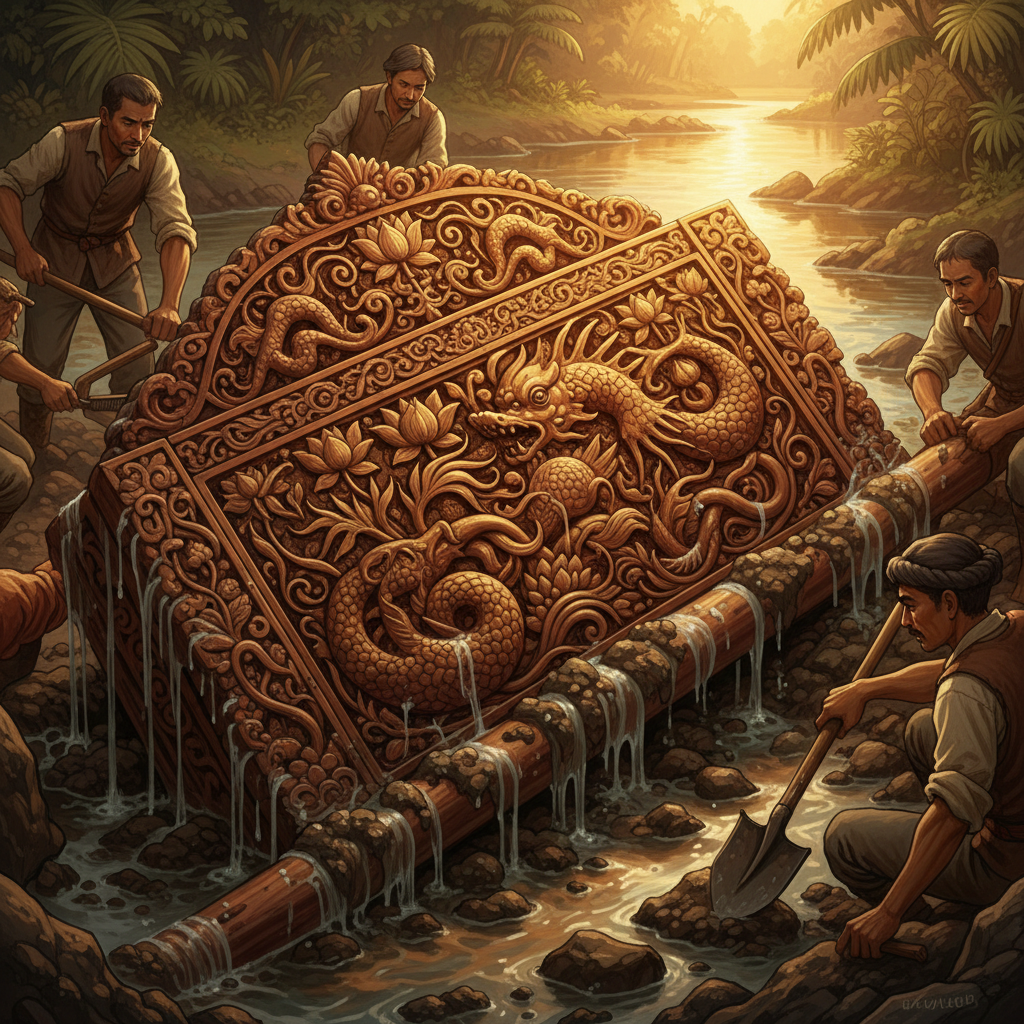
During a salvage excavation at the Prachi River Valley in India, archaeologists found the waterlogged remains of sandalwood palanquins carved with rare oceanic motifs, including sea-makaras and celestial navigators. Radiocarbon dating places these artifacts in the 2nd century AD, suggesting that the tradition of processional deities—similar to the modern Ratha Yatra—existed in a maritime context long before the current temple structures were built.
The palanquins show signs of having been floated on water during specific rituals, pointing to a 'Festival of the Sea' where gods were taken to the shoreline to bless outgoing merchant fleets. This find reshapes our understanding of the cultural heritage of the Bay of Bengal, linking modern religious parades to ancient seafaring guilds and seasonal monsoon rites.