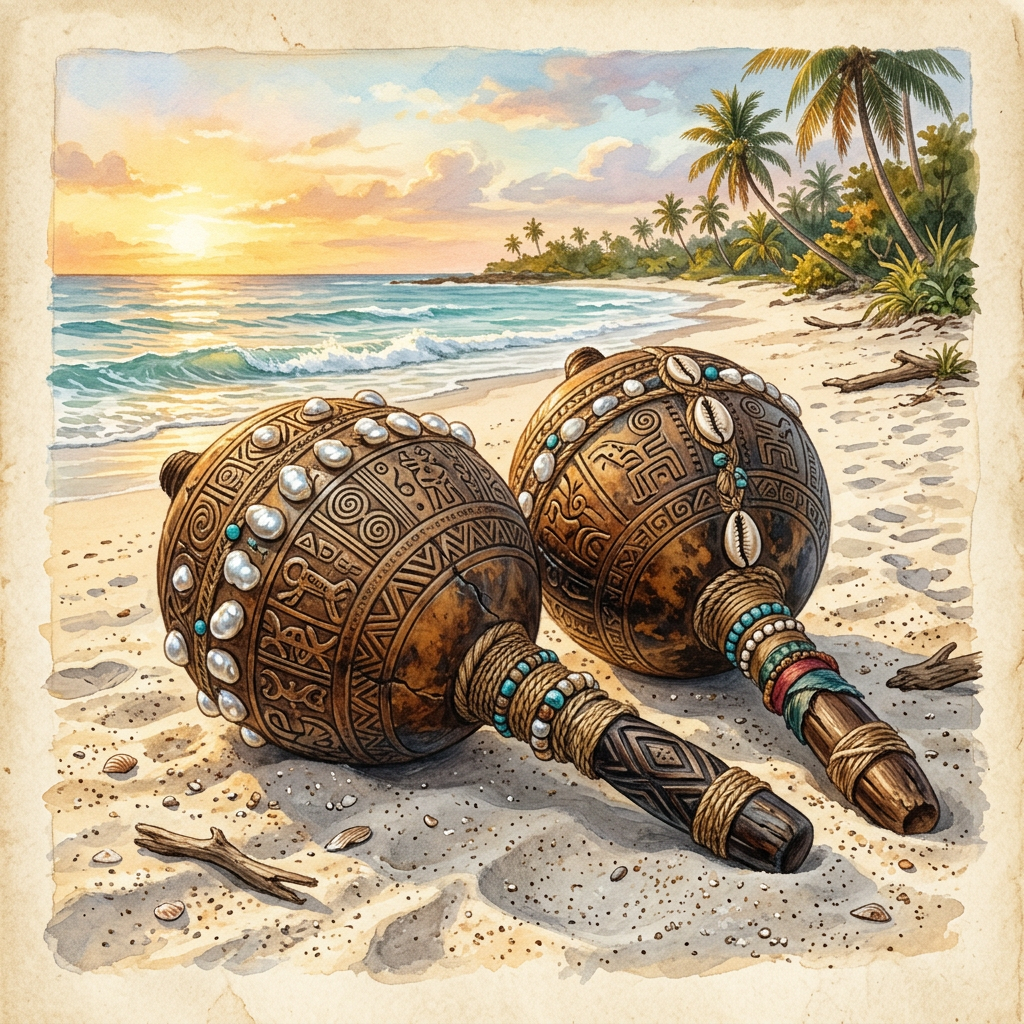
Archaeologists working in the Falcón State of Venezuela have discovered a pair of ceremonial maracas crafted from polished calabash shells and encrusted with thousands of tiny seed pearls. Dated to approximately 150 AD, these musical instruments are thought to be the earliest physical evidence of communal rhythmic rituals intended to appease Juracán, the deity associated with seasonal storms.
The interior of the maracas contained specific rhythmic pellets made of volcanic obsidian and fossilized bone, which produce a distinct high-frequency sound meant to cut through the roar of strong winds. Researchers believe these instruments were central to high-stakes endurance dances performed by indigenous groups during the transition from the dry season to the tropical storm season.