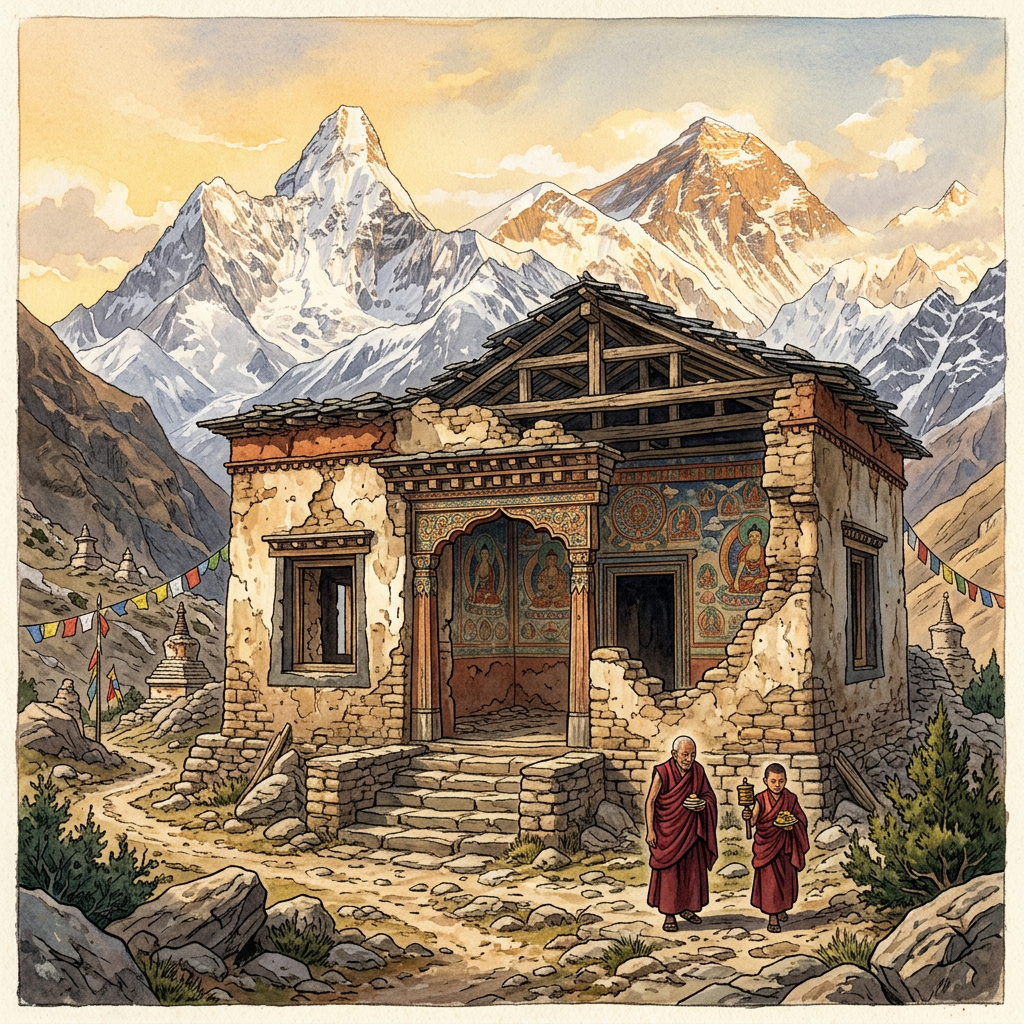
In a high-altitude valley of eastern Ladakh, researchers have discovered the remains of an 8th-century Buddhist temple dating back to the expansion of the Tibetan Empire. The structure is unique for its stucco reliefs, which display a distinct fusion of Indian Pala-dynasty aesthetics and early Tibetan architectural forms.
The temple walls feature remarkably preserved paintings of Bodhisattvas in the 'tri-bhanga' (triple-bend) posture typical of Indian classical art, suggesting that Indian artists from the plains were directly involved in the decoration of these high-altitude sanctuaries. This discovery redefines the understanding of early trans-Himalayan religious exchange and the spread of Vajrayana Buddhism during the early medieval period.