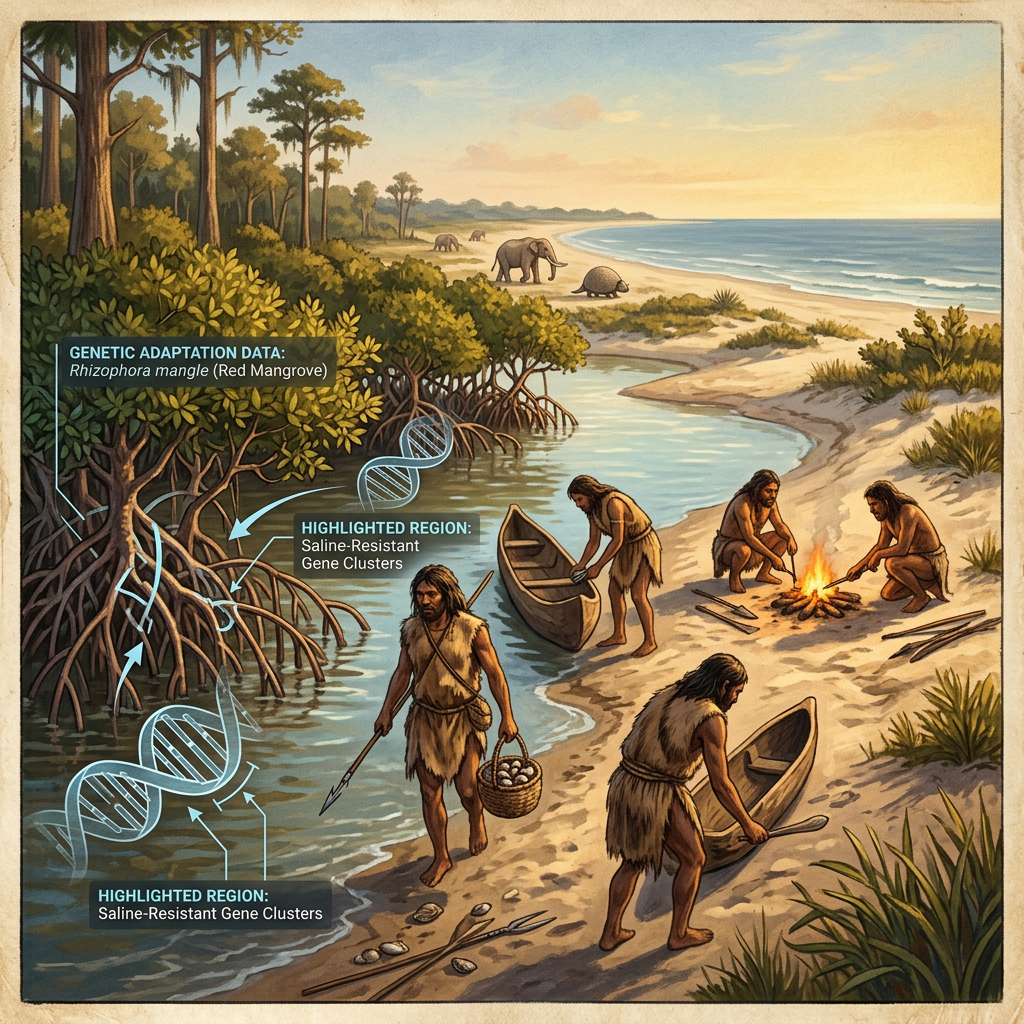
A breakthrough paleogenomic study published in Nature Genetics has unveiled the genetic profile of some of the earliest inhabitants of the Southeastern United States. By analyzing the remains of individuals found in the Florida Panhandle dating back 13,000 years, researchers identified a previously unknown 'ghost' lineage that diverged from other Paleo-American groups during the Late Pleistocene. This population shows unique genetic signatures associated with the metabolism of high-salinity marine proteins and resistance to pathogens common in alluvial swamp environments.
The study suggests that these early foragers were not merely transient migrants but had established deep-rooted ecological niches along the prehistoric coastline. Comparative analysis with modern indigenous populations reveals that while this specific lineage was largely displaced by later migrations, trace elements of their adaptive genetic markers persist in local coastal communities. This finding provides critical new data on the multi-pulse colonization of the Americas and the rapid evolutionary pressures faced by early settlers in the unique sub-tropical ecosystems of the Gulf Coast.