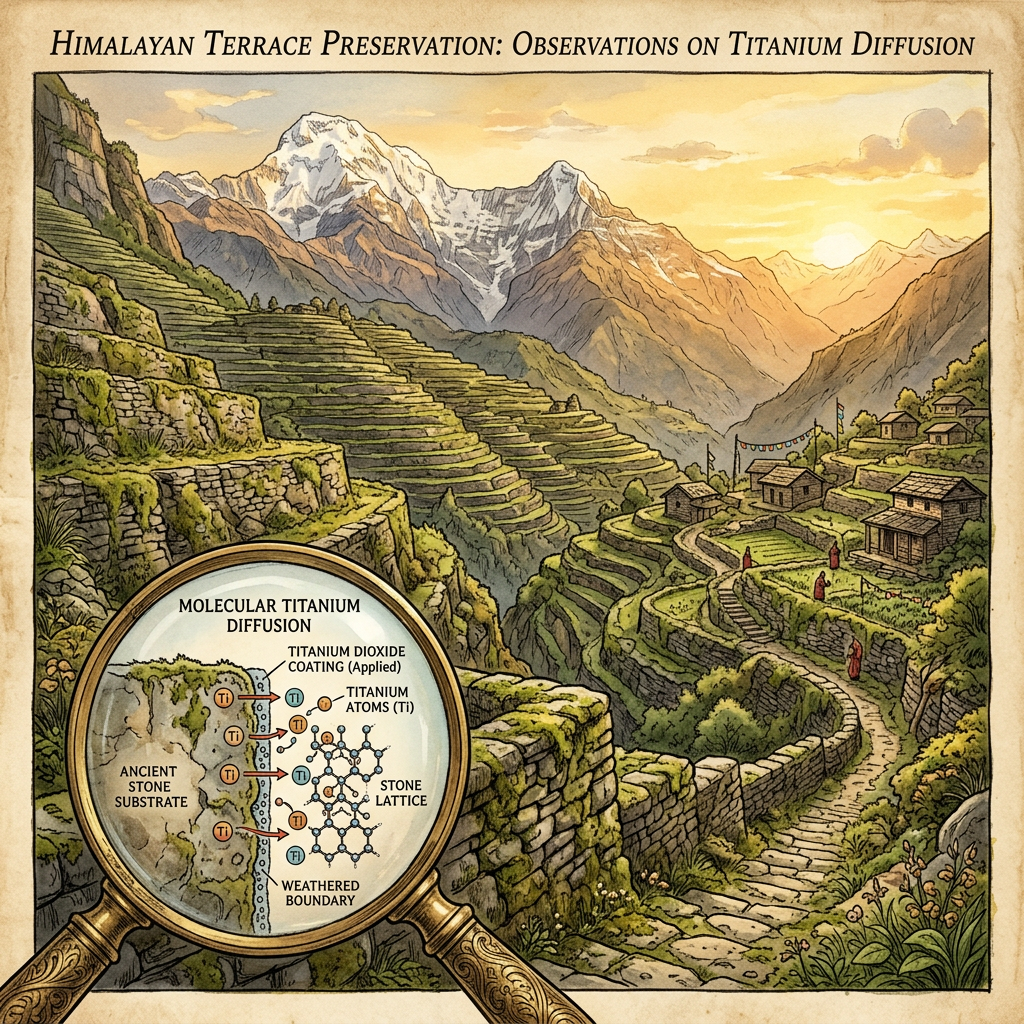
A new dating technique known as Titanium-Diffusion Chronometry has been successfully applied to analyze the stone foundations of ancient terrace-farming sites in the Eastern Himalayas. The study, published in Heritage Science, reveals that the earliest modified slopes in the region date back to 5200 BCE, making them some of the oldest known examples of high-altitude hydraulic and agricultural engineering in Asia. The technique measures the subtle diffusion of titanium ions from the surrounding soil into the micro-fissures of the dressed stone over millennia.
The results suggest that Neolithic communities in the Himalayan foothills had developed complex soil-management and erosion-control systems nearly 2,000 years earlier than previously thought. This discovery challenges existing models of the spread of agriculture in the Northeast, indicating an independent center of innovation that adapted specifically to the steep terrain and high-rainfall patterns of the region. The findings have profound implications for understanding the prehistoric development of the Tibeto-Burman highland cultures.