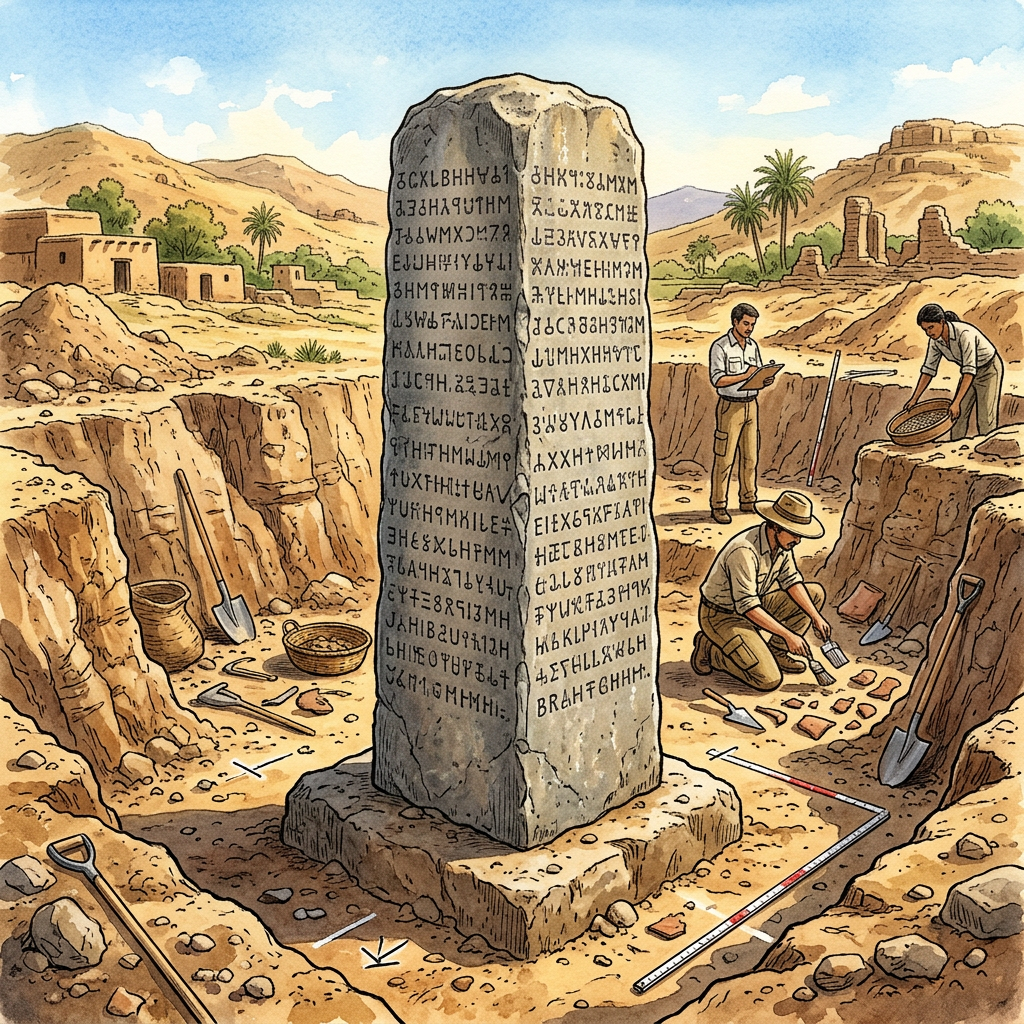
Excavations at a site near modern-day Patna have revealed stone stelae containing inscriptions from the 4th century BCE. The text, titled Dharma-Ansh (Portions of Righteousness), outlines a sophisticated philosophy of "Proportional Justice." It argues that justice is not a uniform set of rules, but a dynamic application of Dharma that must be adjusted according to the specific context and capacity of the individual.
Linguists have noted that the Brahmi script used in these inscriptions shows a high degree of development, suggesting a robust tradition of philosophical writing in the Magadha region prior to the rise of the Mauryan Empire. The discovery challenges the notion that ancient ethical codes were purely rigid, revealing instead a nuanced understanding of moral complexity and human agency.