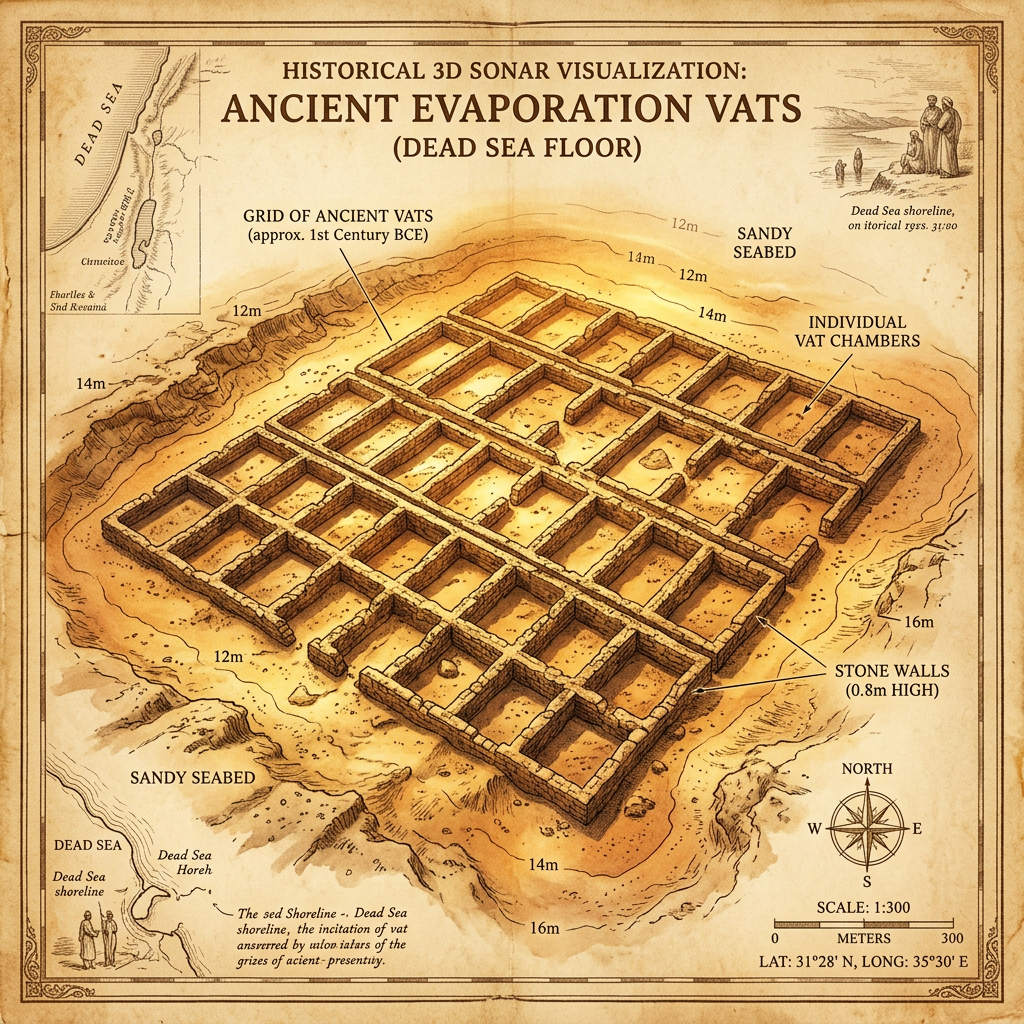
Archaeologists have discovered the ruins of a massive 6,000-year-old salt-production facility submerged beneath the shallow waters of the Dead Sea. Using autonomous underwater vehicles (AUVs) equipped with high-frequency sonar, the team mapped a series of stone vats and evaporation pans that indicate an industrial-scale operation for harvesting salt during the Neolithic period.
The discovery suggests that salt was a primary trade commodity for early Levantine societies, likely exported to Mesopotamia and Egypt. The site also yielded several intact obsidian tools and clay seals, providing evidence of a complex administrative system managing the refinery’s output and distribution networks.