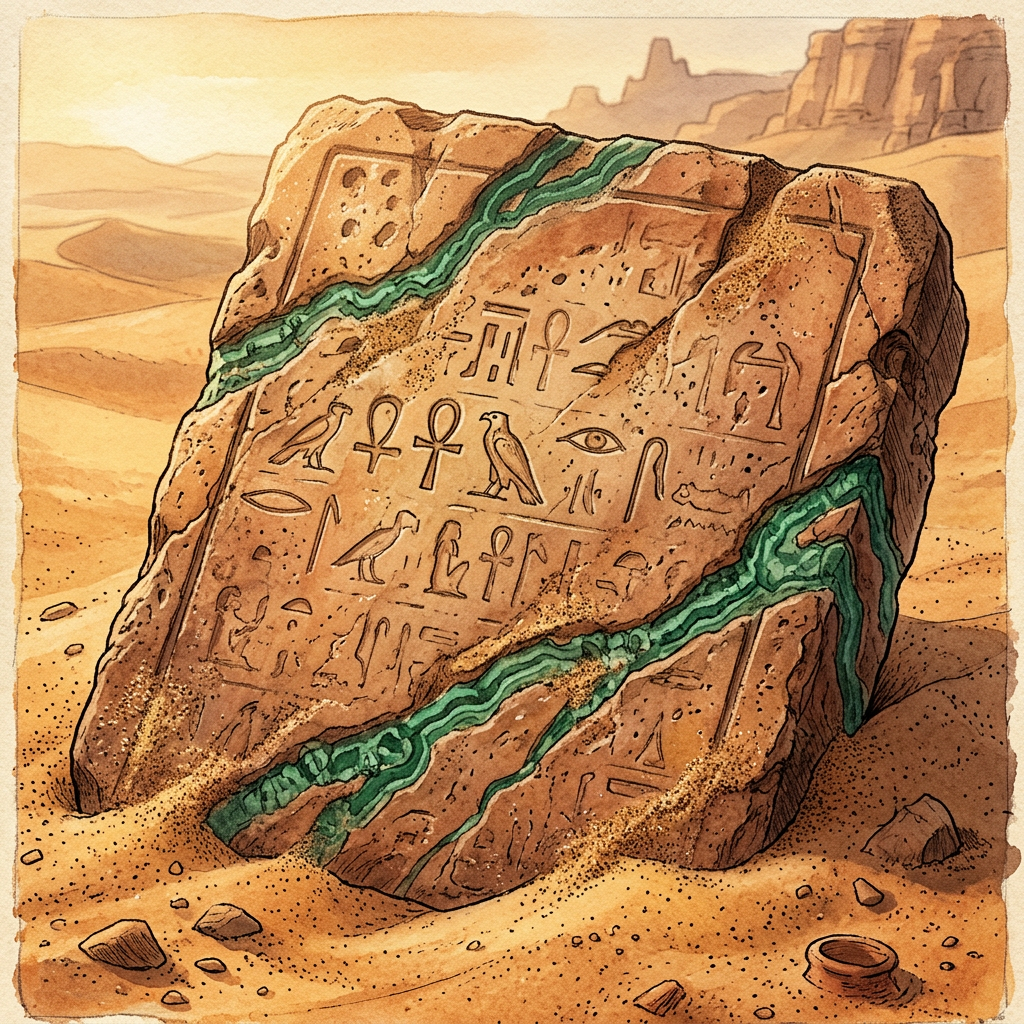
Archaeologists working in the southern Sinai Peninsula have unearthed a series of malachite-veined sandstone tablets within a previously unknown shrine near the ancient copper mines of Serabit el-Khadim. The tablets, which date back to the 18th Dynasty of Egypt, contain inscriptions and depictions of a communal celebration dedicated to the goddess Hathor, specifically invoking her as the "Lady of Malachite" during the annual spring extraction season.
The findings suggest that these mining expeditions were not merely industrial ventures but were framed by elaborate ceremonial festivals involving music, communal meals, and the ritual smearing of malachite powder on the shrine's thresholds. Researchers believe this discovery provides the earliest evidence of a specific "Copper-Blessing" rite that integrated the Egyptian workforce with local Semitic laborers, fostering a shared cultural tradition around the protection of the mines.