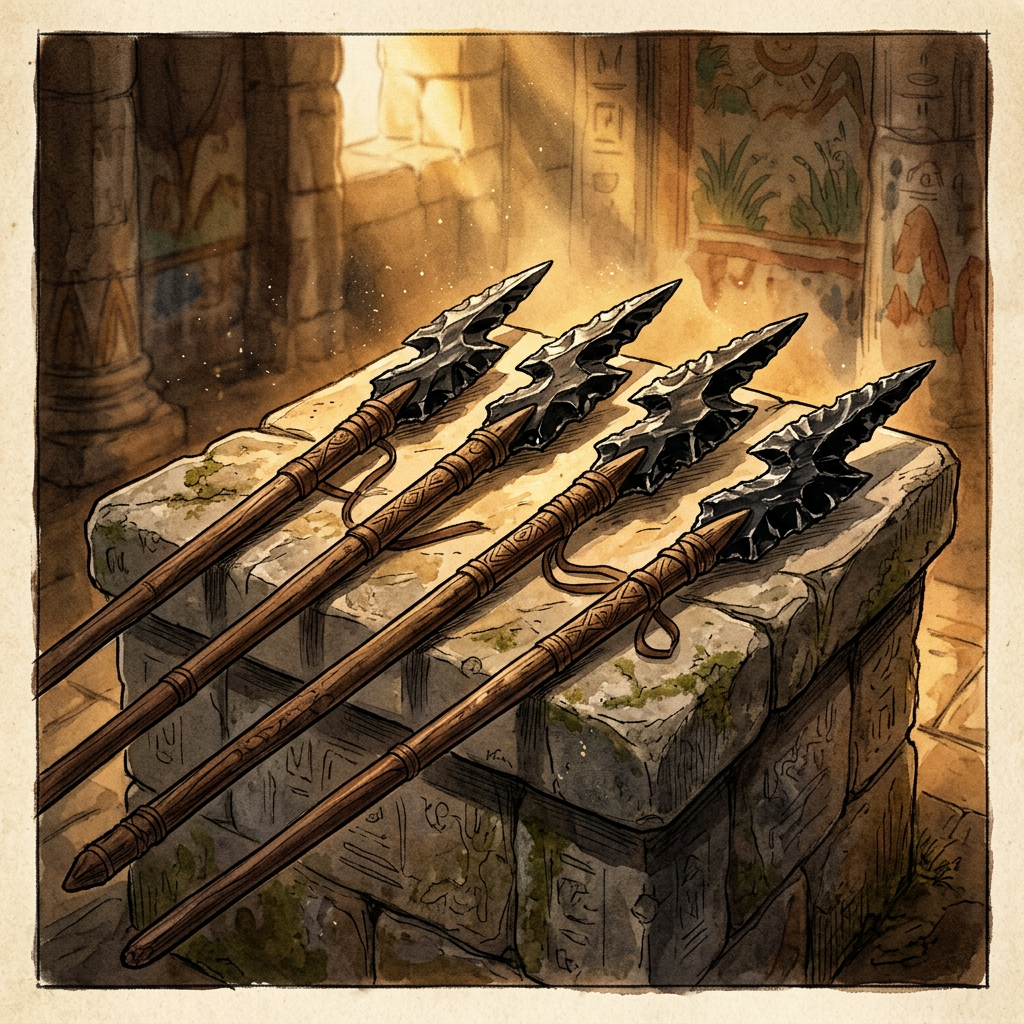
Excavations at the site of Calixtlahuaca have yielded four obsidian-tipped ritual scepters shaped like the undulating body of a serpent. Dated to the late Classic period, these scepters are believed to be the primary regalia for the "Festival of the Rising Wind," a precursor to later Aztec rites dedicated to Ehecatl, the wind god. The obsidian tips are exceptionally thin, designed to catch the light and create a flickering effect when swung in circular motions during dance performances.
The discovery of these artifacts within a dedicated circular temple structure confirms that the ceremonial site was specifically engineered for sound and movement. The presence of volcanic ash embedded in the ritual floor suggests that one such festival may have been held during a period of local volcanic activity, serving as a propitiation rite to calm the atmospheric turbulence believed to be caused by angry deities.