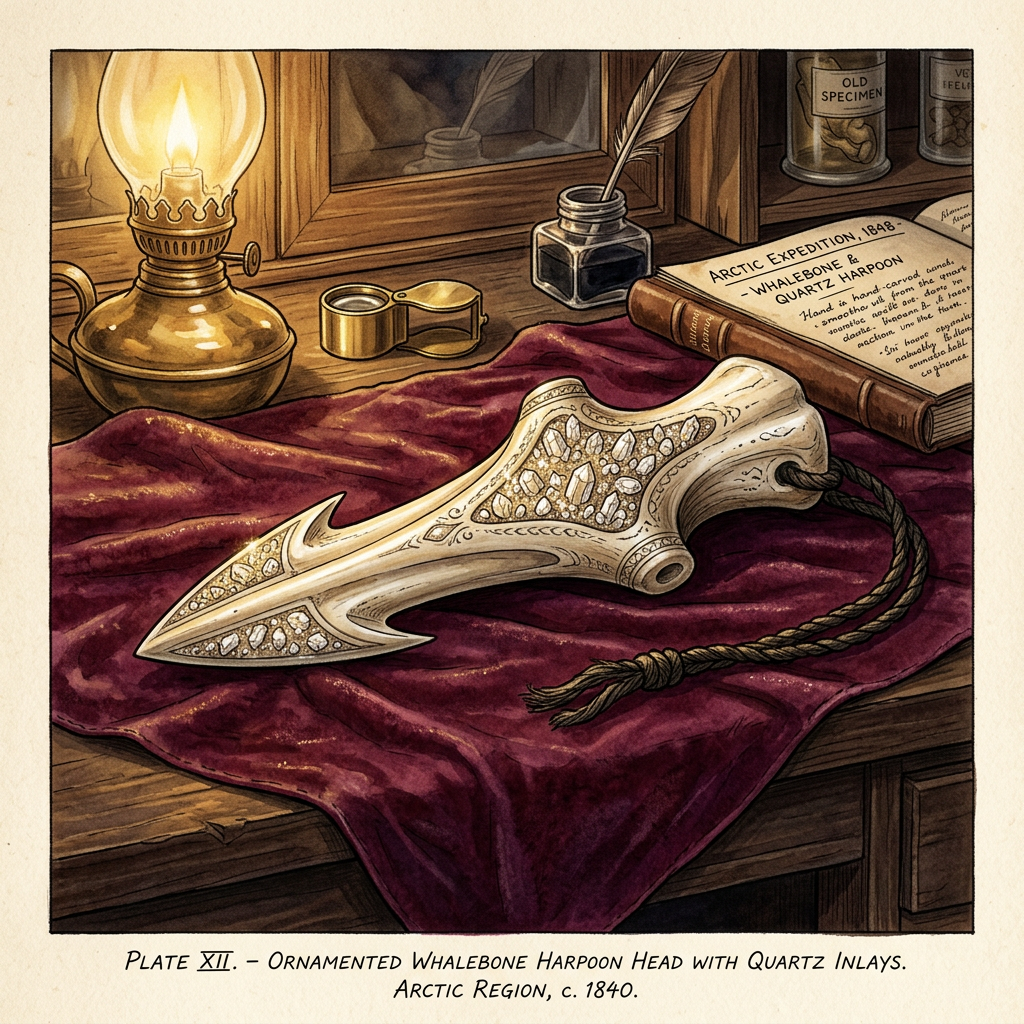
Archaeologists exploring a prehistoric Okhotsk culture site in the Kuril Islands have discovered a cache of quartz-inlaid whalebone harpoons that were never intended for hunting. The delicate craftsmanship and the presence of translucent quartz crystals embedded in the shafts indicate these were votive objects used during the "Sea-Guardian" festivals, where the community offered symbolic weapons to the ocean to ensure safe passage for the fishing fleet.
This find provides a rare look into the ritual traditions of the North Pacific, where the whale was venerated as both a resource and a spiritual deity. The specific placement of the harpoons facing the rising sun suggests that these festivals were timed to coincide with the spring migration of cetaceans, linking human survival to the celestial and biological rhythms of the sea.