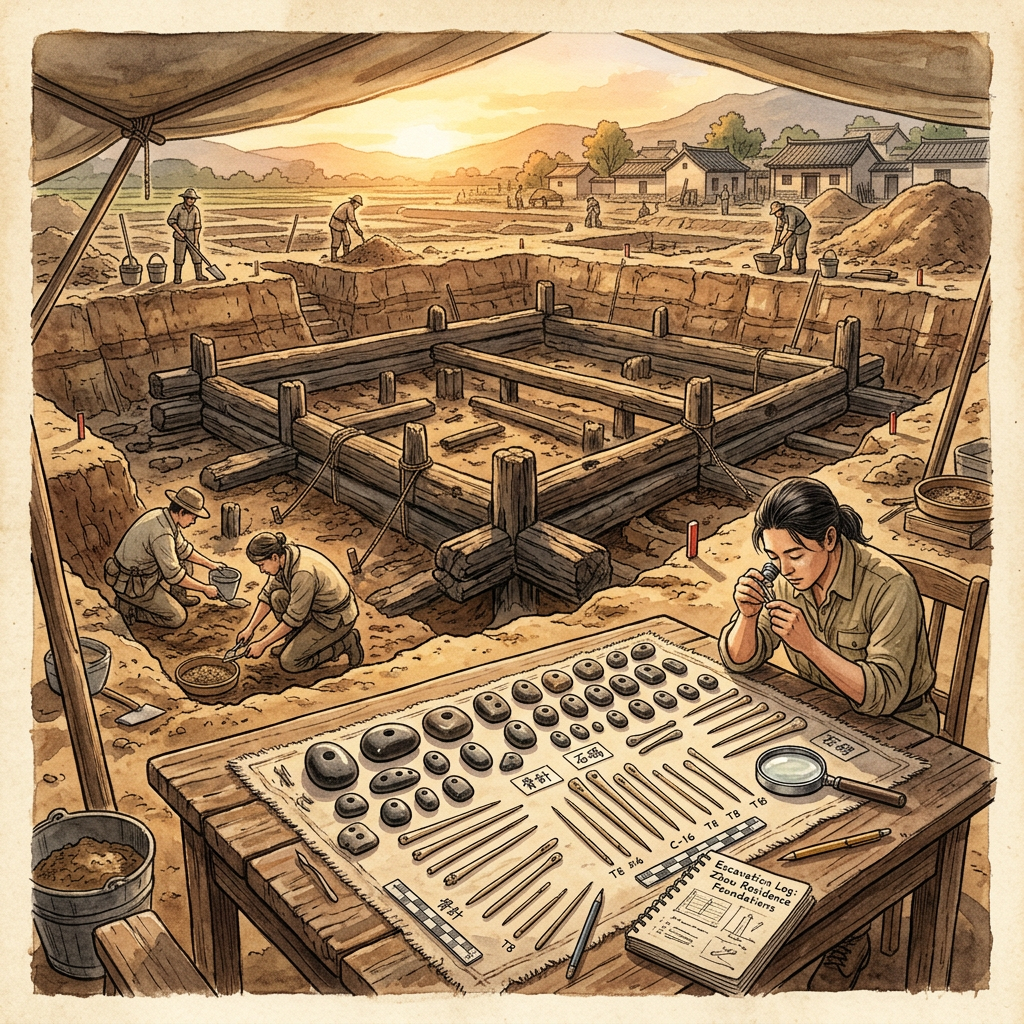
Archaeologists at the Liangzhu heritage site in eastern China have unearthed the remains of a sprawling residence believed to have belonged to a high-status silk merchant. The excavation revealed a sophisticated timber-frame structure with evidence of specialized rooms for the storage and processing of raw silk fibers, predating several known commercial hubs in the region.
Among the most significant finds are dozens of polished stone weaving weights and bone needles found in situ. The discovery of charred mulberry silkworm cocoons within the domestic quarters provides direct evidence of the scale of silk production during the late Neolithic period, suggesting that the Liangzhu people had already established a complex silk-based economy over five millennia ago.