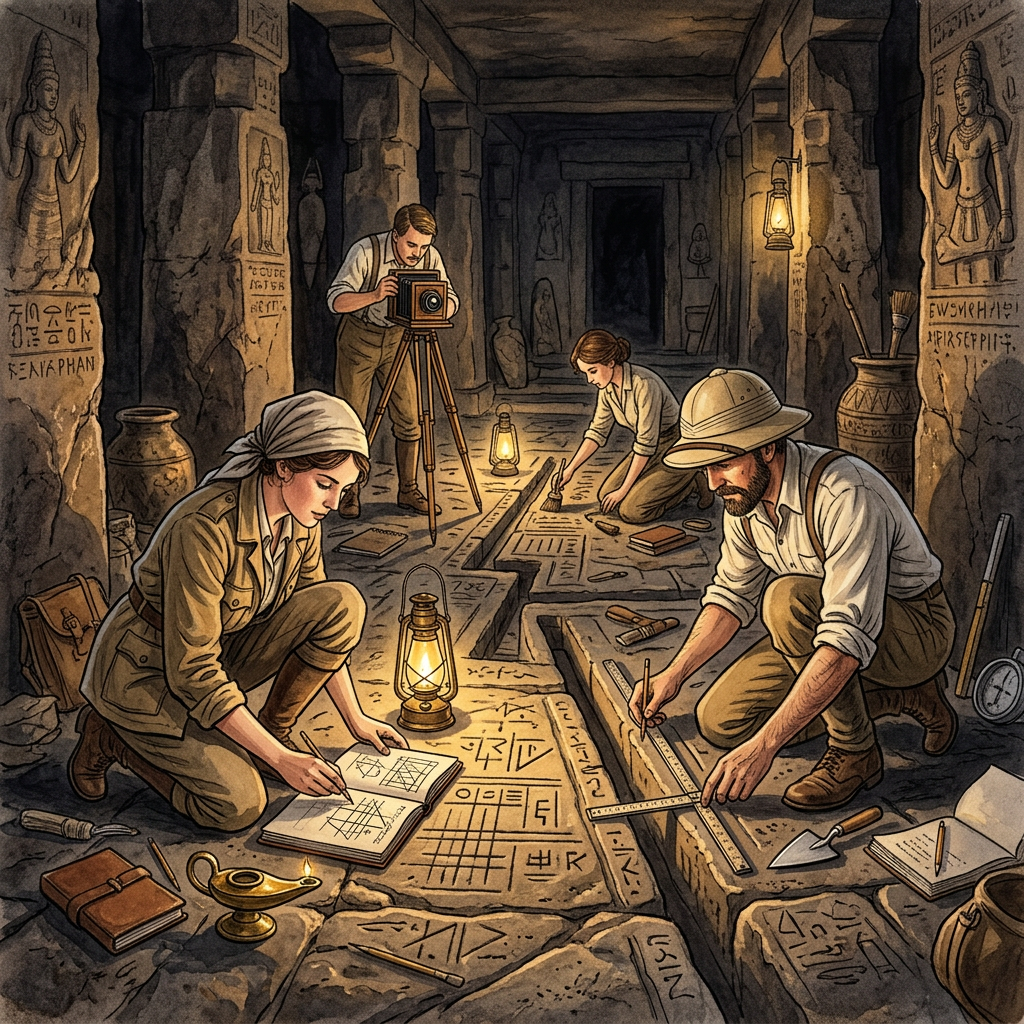
A major restoration effort at a 9th-century temple in Tirupattur, Tamil Nadu, has led to a fascinating discovery regarding ancient Indian architectural engineering. Conservationists found a series of intricate, sub-surface channels carved directly into the massive granite flooring of the Garbhagriha (inner sanctum). These channels were connected to an external reservoir that was once filled with water infused with cooling herbs like vetiver, sandalwood, and camphor.
This sophisticated "passive cooling system" was designed to regulate the temperature of the stone sanctuary during the intense summer months. The porous nature of the specific mortar used allowed the aromatic, cooled air to seep upward, creating a chilled and fragrant environment for the deities and priests. This finding highlights the incredible attention early Chola architects paid to the sensory and thermal comfort of sacred spaces.