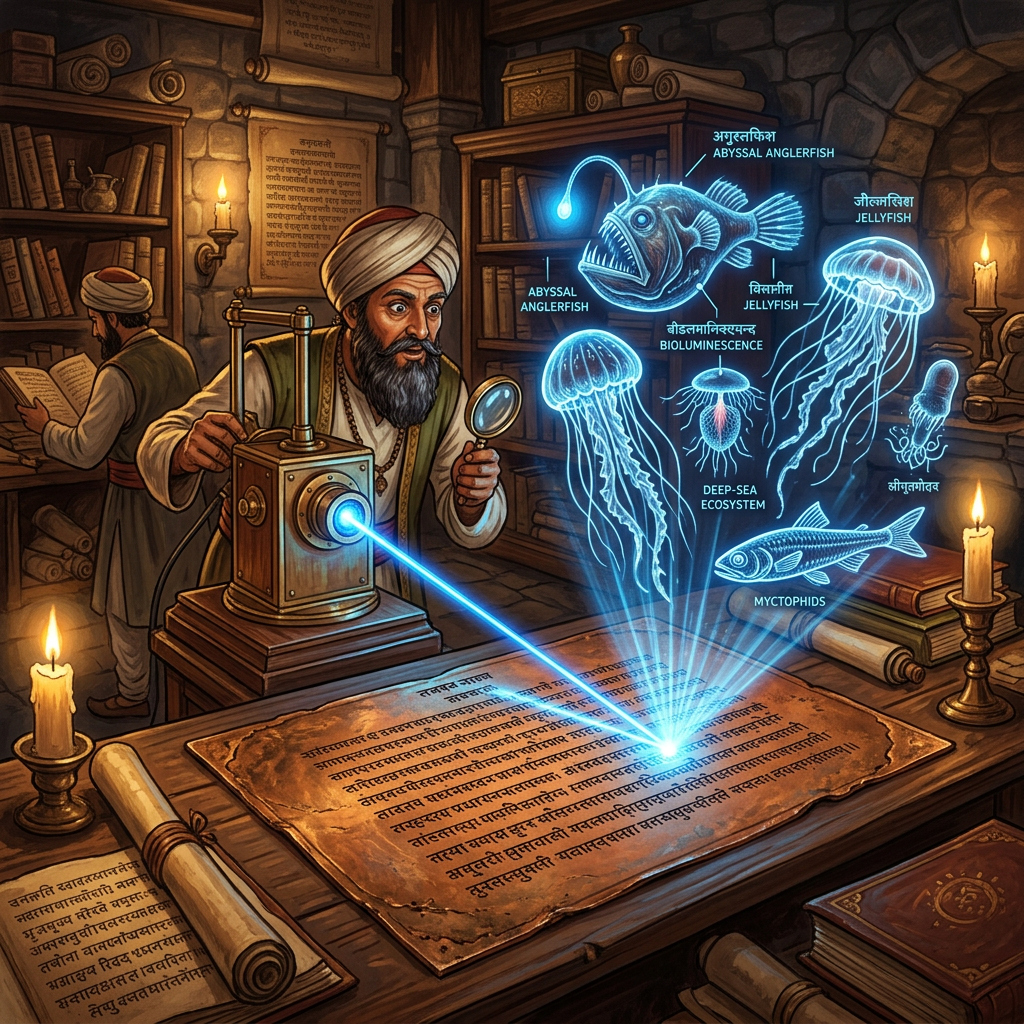
Researchers at the Institute of Digital Epigraphy have announced the successful decipherment of a series of heavily weathered 9th-century copper plates found in the Andaman Islands. Using a new AI model trained on regional Grantha script variants, the team uncovered a series of lost Sanskrit texts titled the 'Samudra-Jiva-Vigyan'. The manuscripts contain remarkably detailed descriptions of deep-sea organisms, specifically those clustering around volcanic hydrothermal vents, which were referred to as 'Agni-Mukha' or 'Fire-Faced' creatures.
The texts provide systematic classifications of various thermal-resistant species, detailing their morphology and observed behaviors. This research indicates that medieval Indian maritime explorers possessed sophisticated knowledge of deep-sea biology and thermal geography, likely aided by observations made during long-distance naval expeditions across the Bay of Bengal. Scholars believe these findings will fundamentally change our understanding of pre-modern biological sciences and ancient Indian naval exploration capabilities.