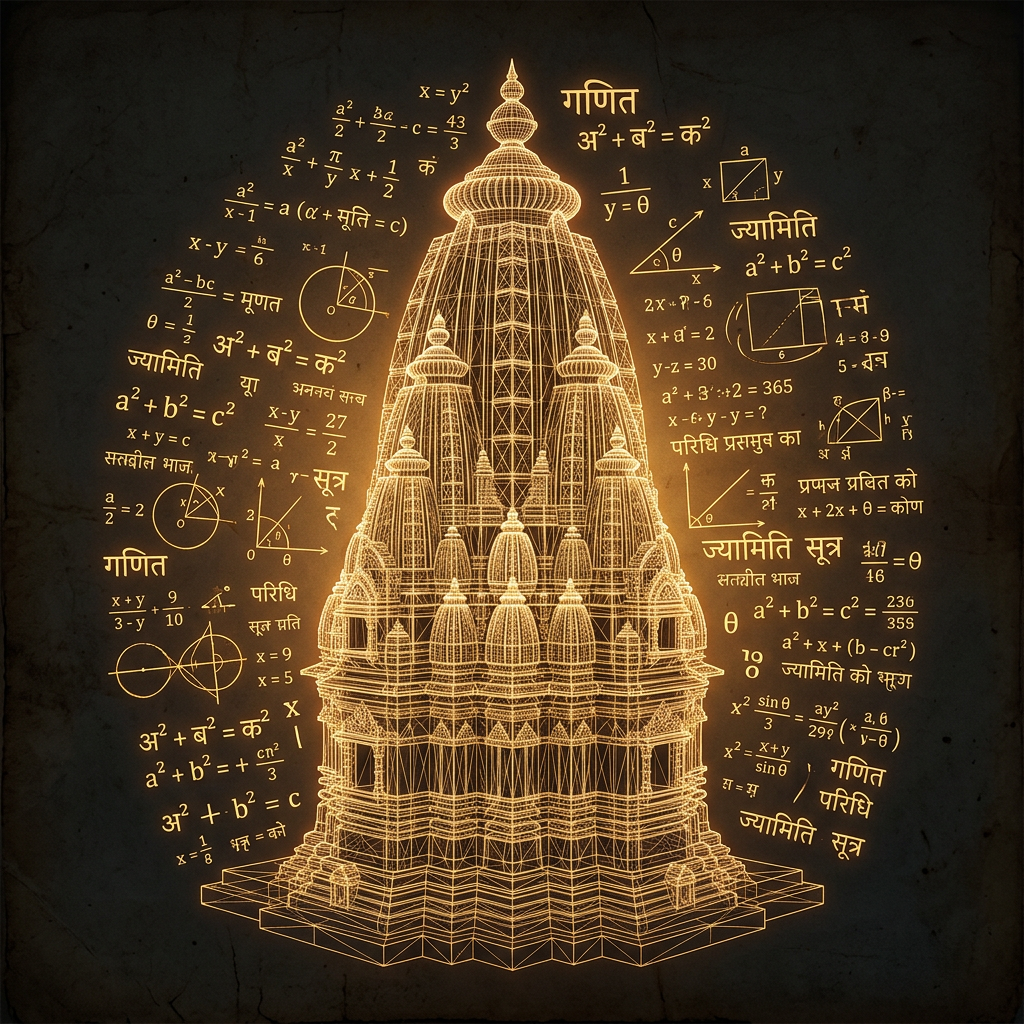
New research into the Ganita-Kaumudi, a 14th-century mathematical treatise by Narayana Pandita, has uncovered a sophisticated series of algorithms designed to calculate the non-linear elasticity of layered building materials. Using modern computational modeling to simulate the formulas described in several newly recovered variants of the manuscript, scholars found that the mathematical logic perfectly models the stress distribution within composite stone and wood structures. These algorithms suggest that medieval Indian architects used advanced recursive math to ensure the structural integrity of high-rise temple spires.
The study, published in the Academic Journal of Indic Science, highlights how these Sanskrit texts predated modern solid mechanics by centuries. By applying 'Lalit-Krama' or 'Graceful Sequences'—a precursor to modern finite element analysis—ancient mathematicians were able to predict where structural fatigue would occur in massive granite foundations. This research provides a new mathematical framework for understanding the incredible longevity of South Indian temple architecture.