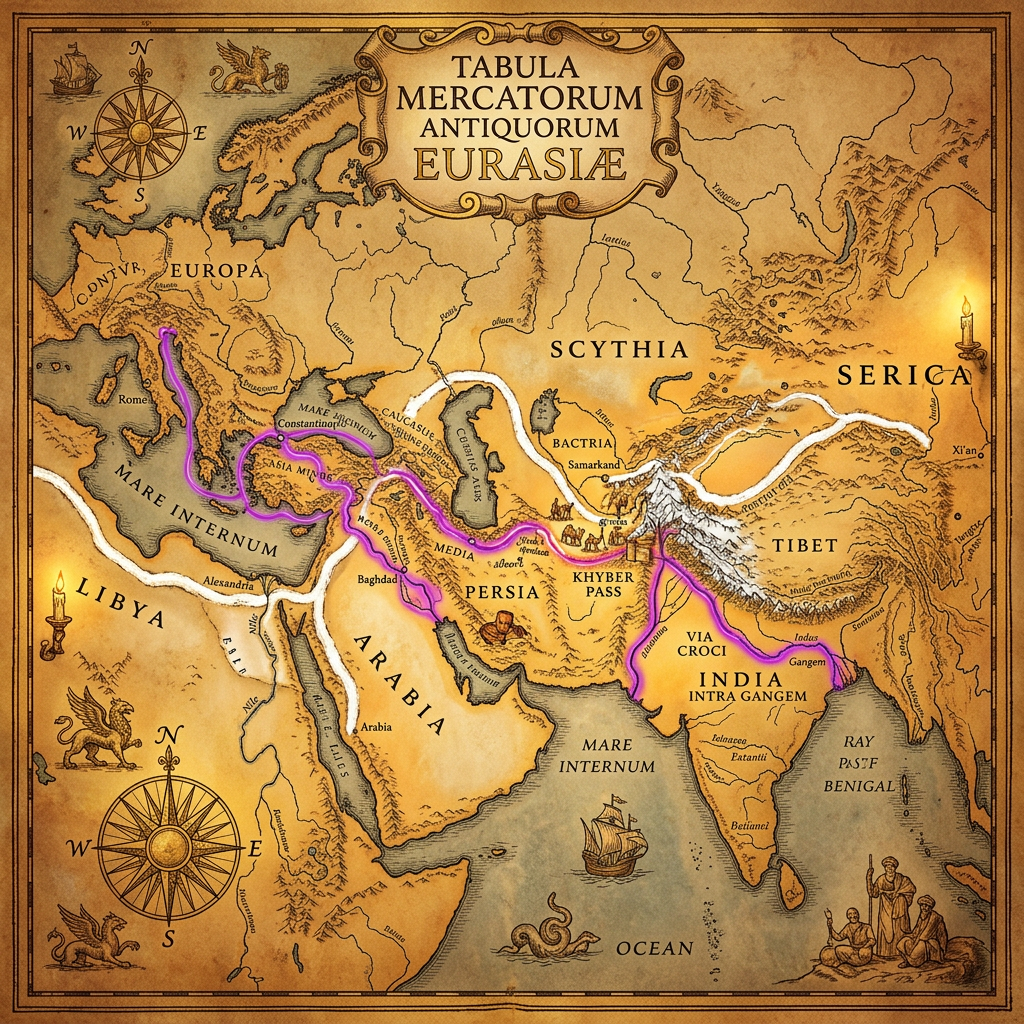
New geochemical analysis of organic residues in ancient pottery has revealed the existence of the 'Salt and Saffron Route,' a 2,000-year-old luxury trade network that connected the Dead Sea to the Hindu Kush. Researchers found traces of Himalayan saffron in Judean storage jars, while Dead Sea bitumen and salts were discovered in the remains of high-altitude caravanserai in modern-day Tajikistan.
This discovery provides evidence of a specialized trade in high-value condiments and minerals that functioned independently of the main Silk Road trunk. The research highlights how micro-climates drove ancient economies, as communities in disparate geographic regions exchanged rare resources through sophisticated intermediary networks.