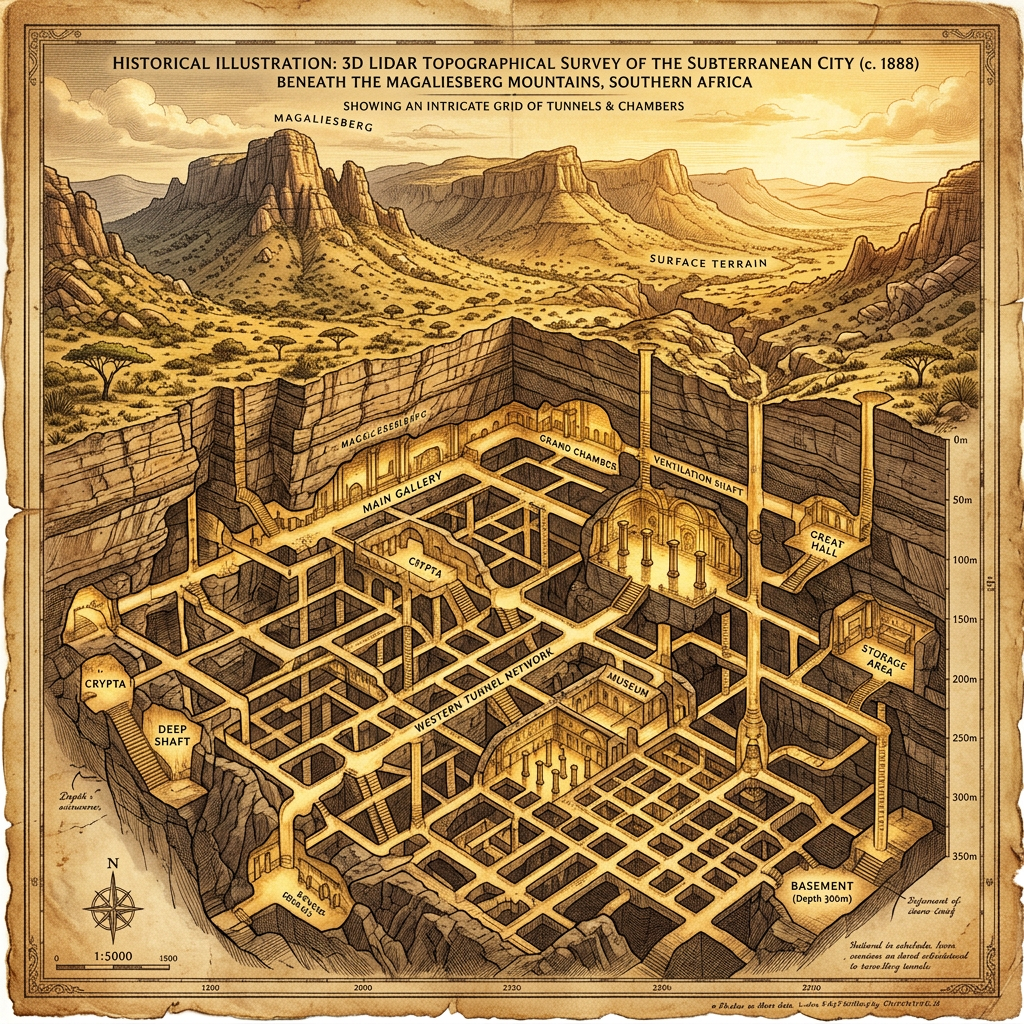
A high-resolution LiDAR survey conducted in the rugged Lasta Mountains of Ethiopia has identified a sprawling network of interconnected subterranean structures dating to the 10th-century Zagwe Dynasty. This network, which predates the famous rock-hewn churches of Lalibela, consists of over three miles of hand-cut tunnels linking dozens of hidden monastic cells and communal chapels.
The mapping reveals a sophisticated ventilation and drainage system that allowed large communities of monks to live and worship entirely underground for extended periods. This discovery suggests that the tradition of rock-cut architecture in Ethiopia was far more extensive and ancient than previously believed, likely serving as a defensive strategy during a period of significant regional instability. The LiDAR data also pinpointed several unrecorded surface settlements that supported the subterranean complex.