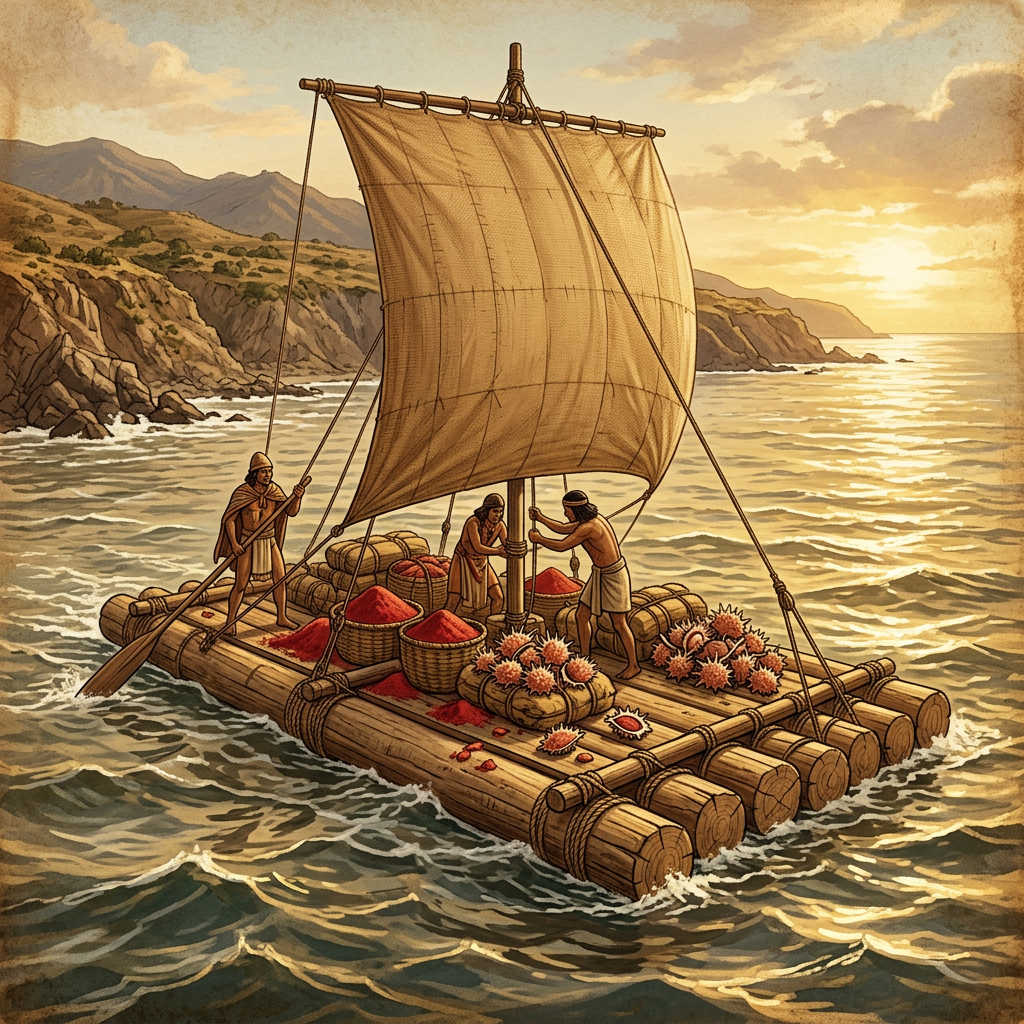
Archaeologists have uncovered evidence of a sophisticated long-distance maritime trade network, dubbed the 'Spondylus-and-Cinnabar Seaway,' connecting the Manteño-Huancavilca cultures of Ecuador with the Capacha culture of West Mexico. Using chemical fingerprinting of Spondylus shell artifacts found in Mexican tomb sites, researchers confirmed that these sacred shells were transported via high-seas balsa rafts over 2,500 miles along the Pacific coast.
In exchange for the 'Thorny Oyster' shells, South American traders received high-grade cinnabar and obsidian. This discovery, published in Ancient Maritime Studies, suggests that pre-Columbian sailors possessed advanced navigational skills and knowledge of seasonal currents centuries earlier than previously estimated, reshaping our understanding of Inter-American cultural exchange.