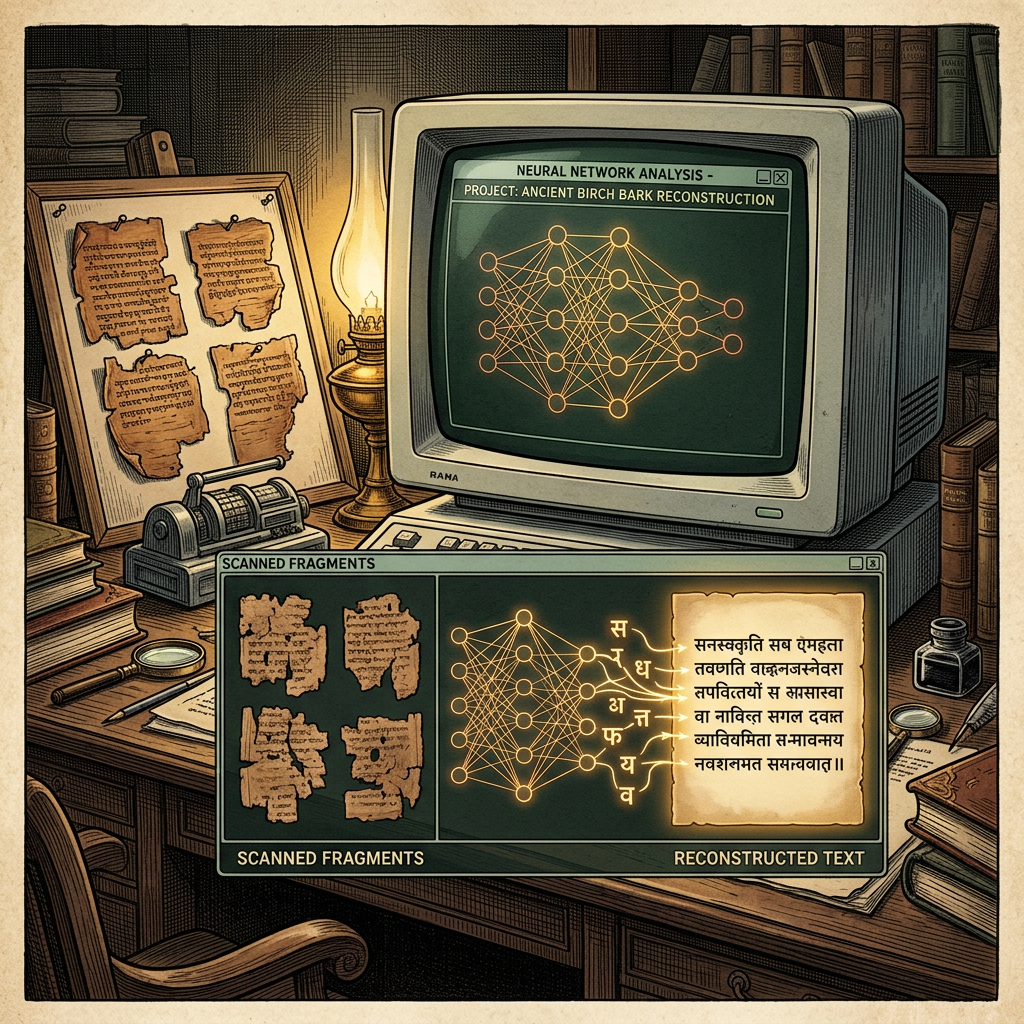
Using a novel deep-learning architecture, researchers have successfully deciphered a collection of fragmented 9th-century birch-bark manuscripts in the Sharada script discovered in the Nubra Valley, Ladakh. The AI models, trained specifically on medieval Himalayan epigraphy, revealed that the fragments are part of a lost treatise on Geobotanical Engineering. The text describes systematic methods for using specific plant species to identify mineral deposits and manage soil erosion in high-altitude environments.
The deciphered sections include advanced botanical classifications and recursive Sanskrit formulas for calculating the mineral content of water based on the color of riverine flora. This find represents a major breakthrough in the history of ancient Indian environmental science, showing that 9th-century scholars had developed sophisticated ecological management systems for the fragile Himalayan ecosystem. The research team plans to publish the full translation and the AI methodology in an upcoming digital humanities volume.