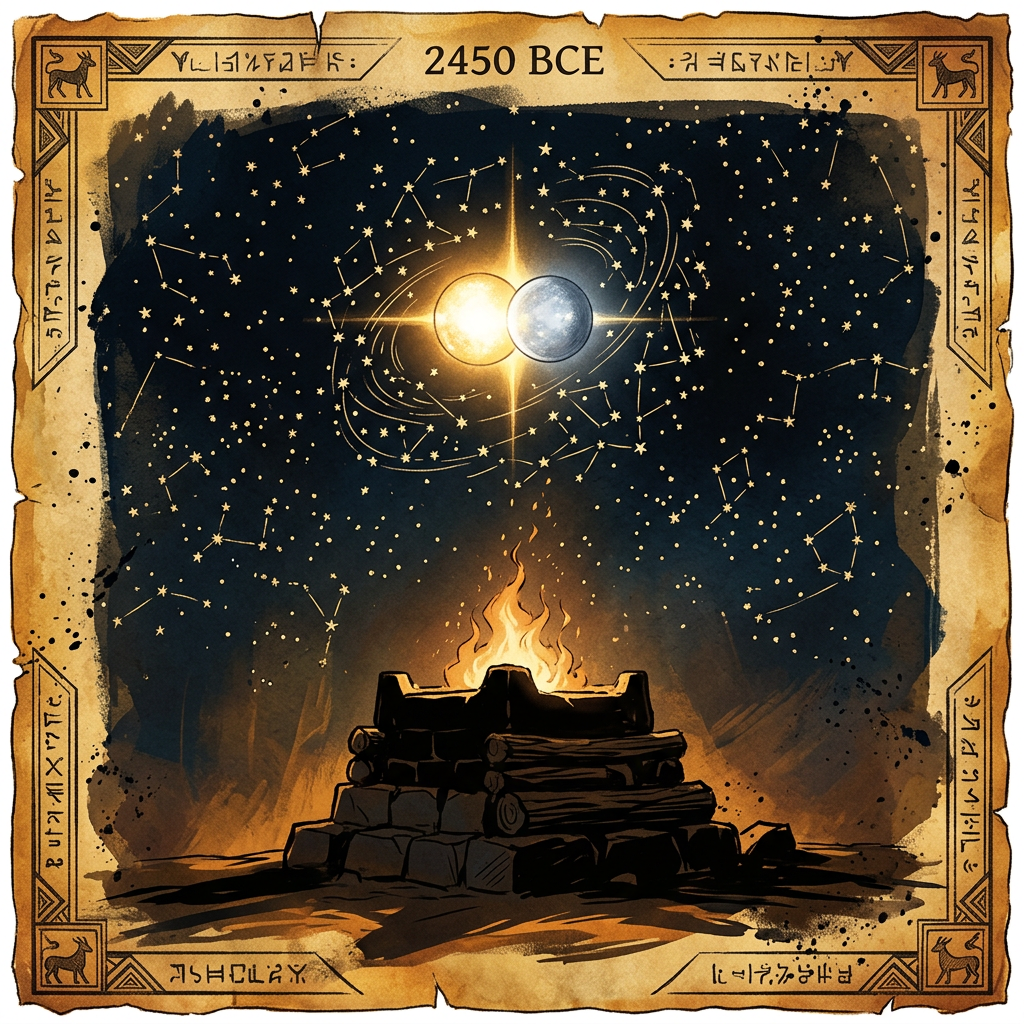
A computational study released by the Archaeoastronomy Research Group has identified a precise correlation between celestial descriptions in the later layers of the Rigveda and a rare planetary event. By using high-fidelity simulations of the ancient night sky, researchers matched ritual verses mentioning the 'fiery chariot' and 'slow-moving titan' to a Great Conjunction of Saturn and Mars that occurred in the constellation of Rohini in 2450 BCE. This alignment would have been a spectacular visual event, appearing as a single bright object in the pre-dawn sky.
This finding provides a vital chronological marker for the Vedic corpus, suggesting that the astronomical knowledge of the era was based on direct, systematic observation. The study argues that the precise nomenclature used for planets indicates a deep understanding of orbital velocities and periodicities long before the formalization of Siddhantic astronomy. The research has major implications for the dating of ancient Indian texts and the development of mathematical astronomy in the Bronze Age.