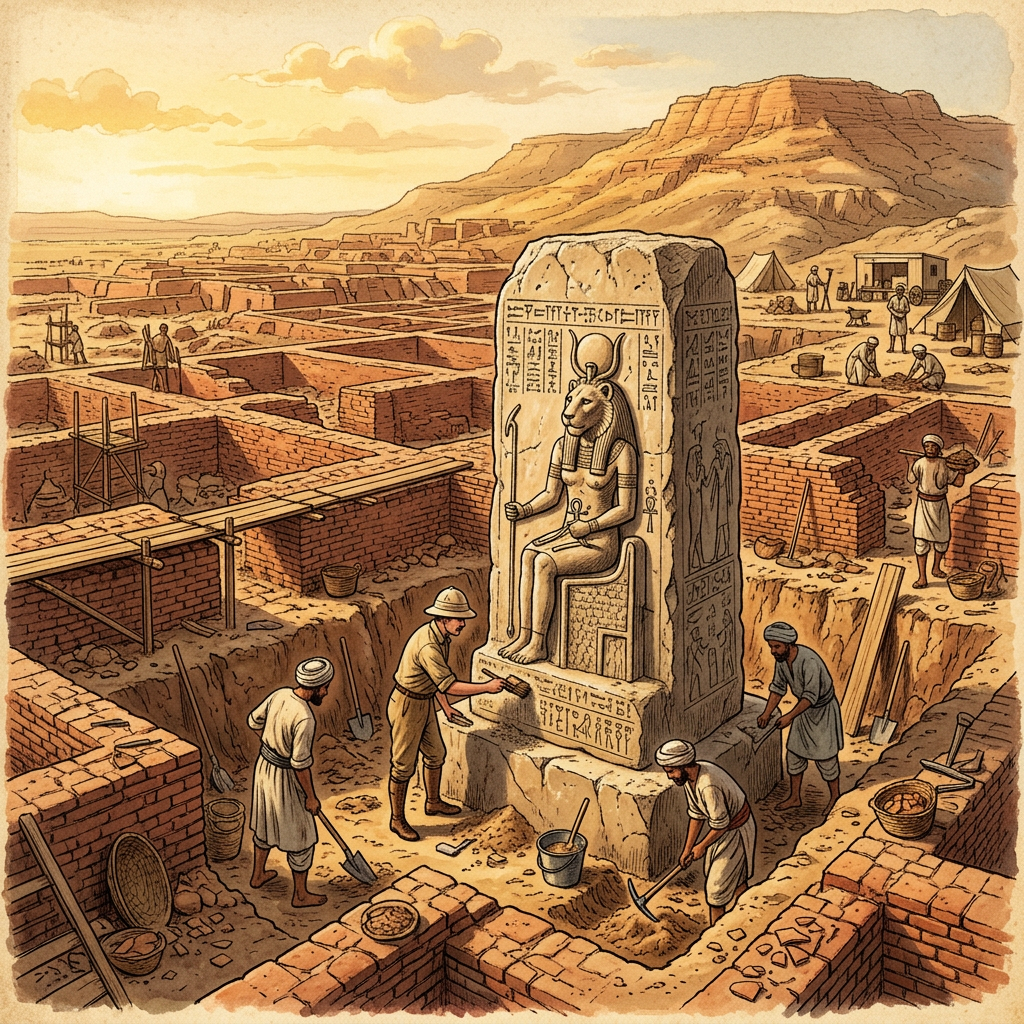
Archaeologists have unearthed the foundations of a 7th-century brick temple in the Palnadu district of Andhra Pradesh, attributed to the Vishnukundina dynasty. The structure, remarkably preserved beneath layers of riverine silt, features a unique cruciform ground plan and is dedicated to Lord Narasimha, evidenced by a rare limestone pilaster depicting the deity in a seated yogic posture.
The excavation has revealed that the temple was built using oversized bricks typical of the late Post-Gupta transition period, held together by a sophisticated lime-and-sand mortar. This discovery is significant as it bridges the architectural gap between the earlier Ikshvaku brick structures and the later monolithic rock-cut experiments of the Pallavas, showcasing a localized evolution of sacred space in the Krishna River basin.