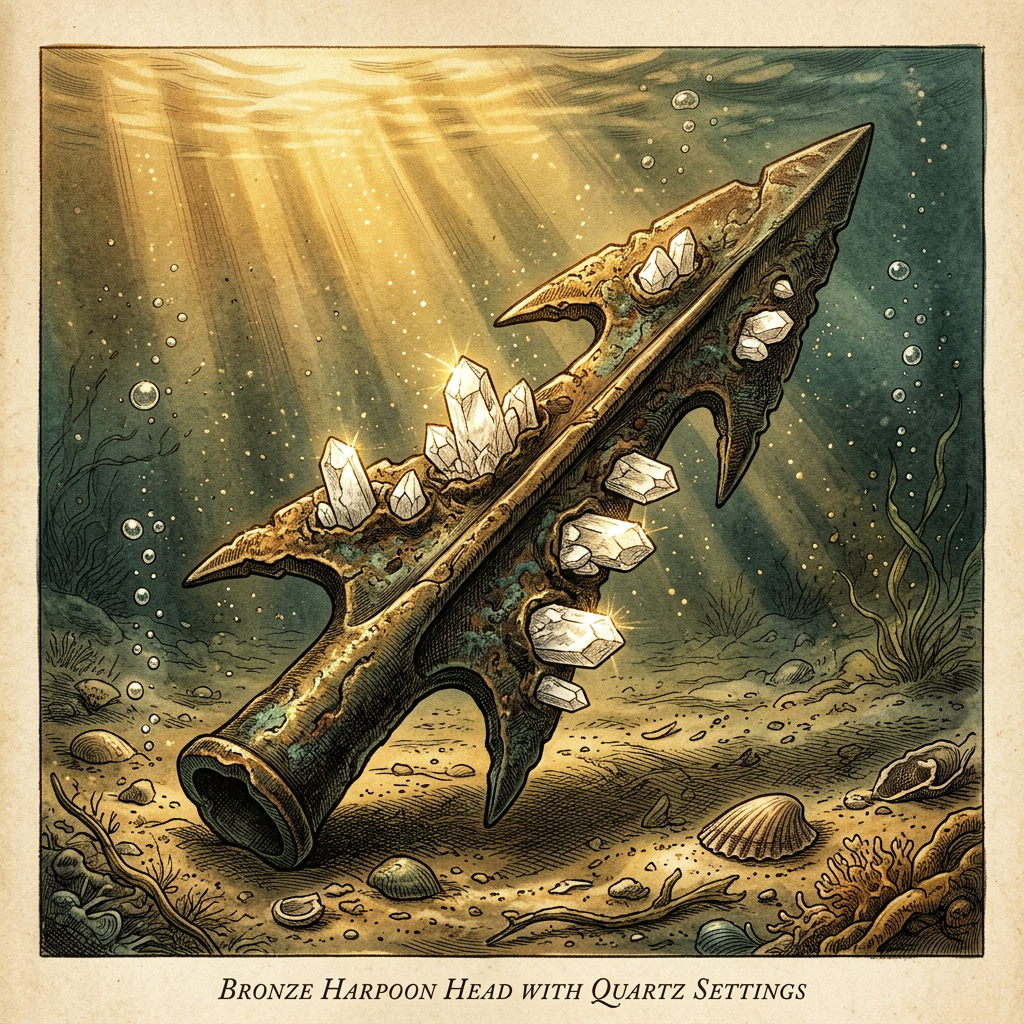
Excavations at a prehistoric coastal site near the Bangudae Petroglyphs in Ulsan have uncovered a series of bronze harpoons embedded with shards of white quartz. These non-functional, decorative harpoons are believed to have been ceremonial batons used during 'Whale-Song' festivals, where ancient coastal communities gathered to welcome migrating whales.
The quartz was likely intended to catch the sunlight and shimmer underwater during symbolic ritual hunts. This discovery provides the first physical artifact evidence to complement the famous rock art of the region, proving that the spiritual connection between early Koreans and the marine environment was expressed through elaborate seasonal performance and artistry.