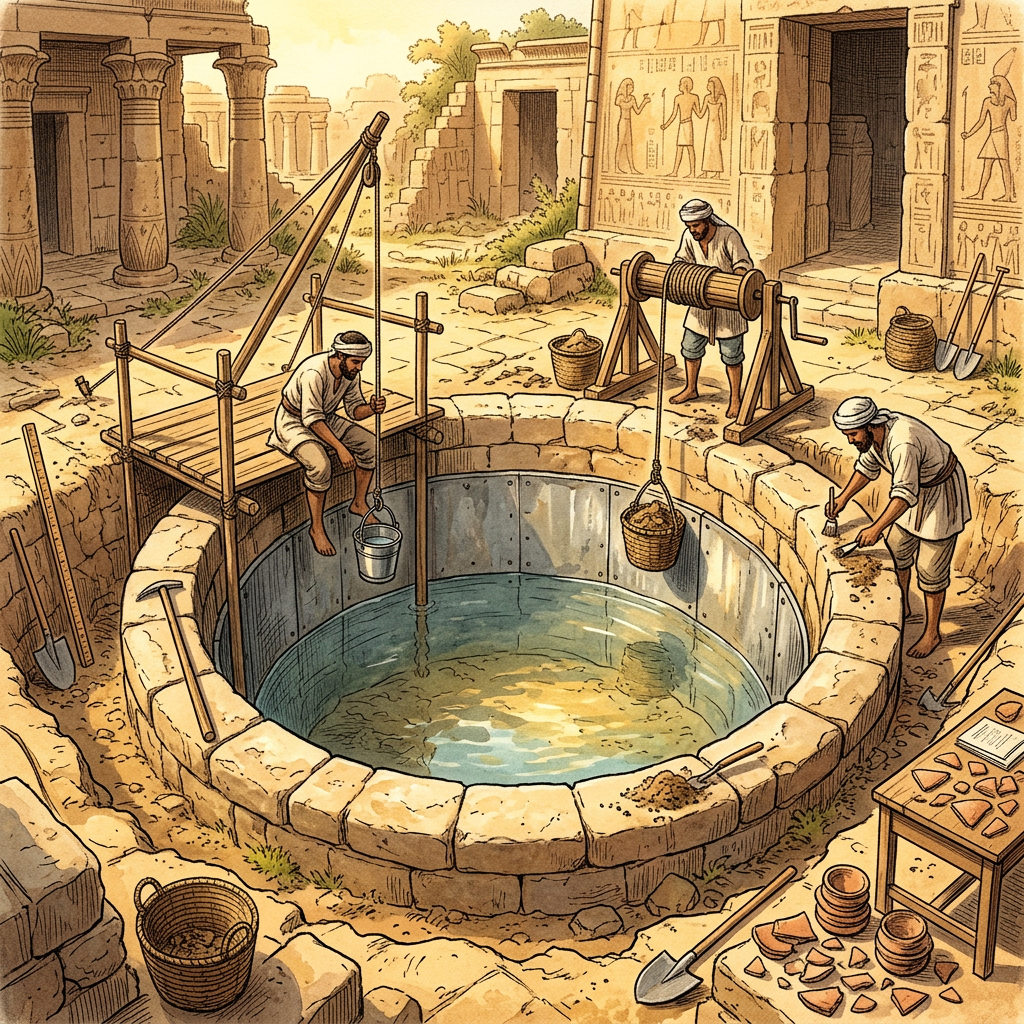
During the ongoing restoration of a 10th-century Kachchhapaghata dynasty shrine in Madhya Pradesh’s Shivpuri district, conservationists discovered two hidden subterranean wells. Unlike typical temple tanks, these pits were found to be lined with high-purity zinc plates, a sophisticated metallurgical application designed to keep ritual water chemically pure and resistant to bacterial growth.
The discovery provides new insights into the medieval hydraulic engineering used in temple architecture. In addition to the wells, the team uncovered a series of sandstone conduits that channeled rainwater from the temple roof directly into these purified chambers. These findings highlight the advanced understanding of water preservation and sanitation possessed by the architects of the Kachchhapaghata era.