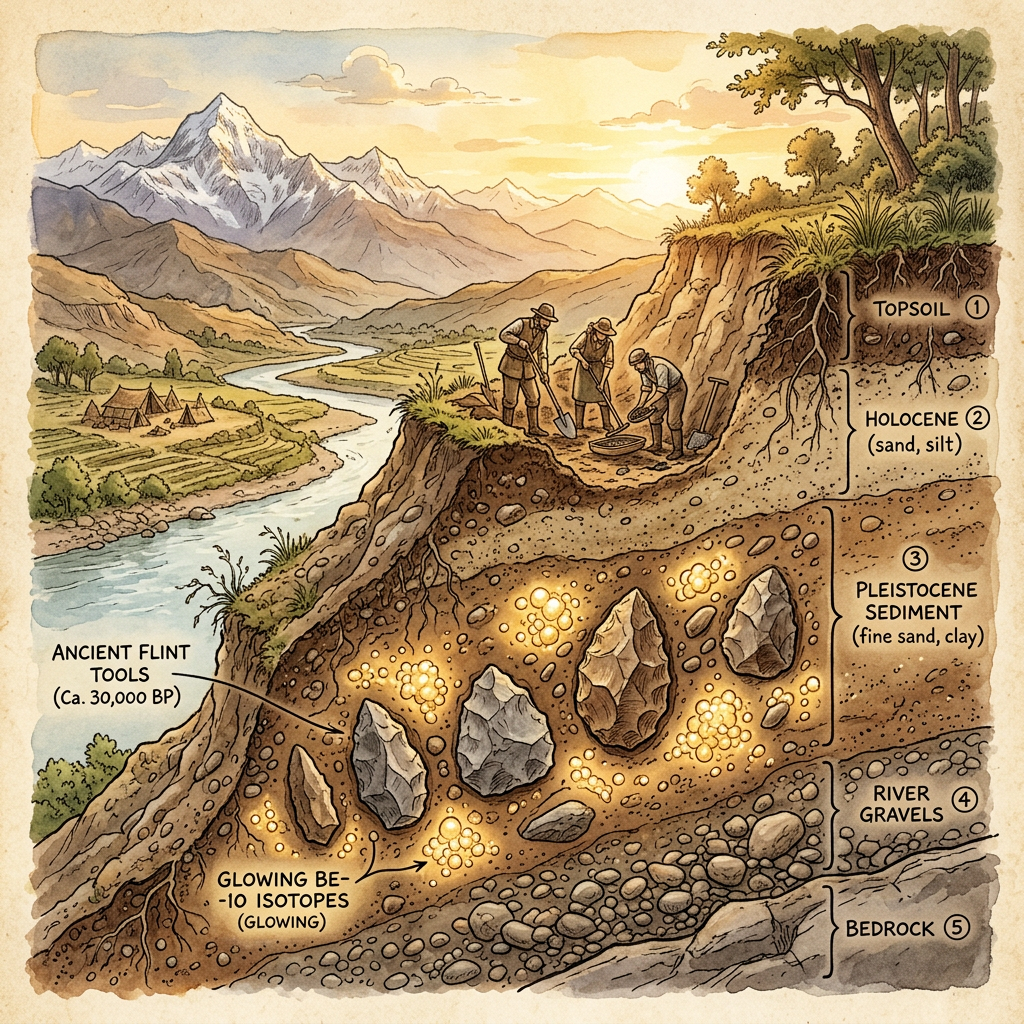
Geologists and archaeologists have successfully tested a novel Beryllium-9 isotopic calibration to refine the timeline of early human presence in the Siwalik Hills. The study, featured in Quaternary Science Reviews, pushes back the human occupation of the region to approximately 2.2 million years ago, based on the analysis of cosmogenic accumulation in ancient riverbed silt layers containing primitive stone tools.
This new methodology offers a significant improvement over previous dating techniques, as it remains stable in environments where radioactive carbon or argon-argon dating is often compromised by volcanic or fluvial interference. The findings confirm that the Siwalik corridor served as a primary route for early hominin dispersal out of Africa much earlier than traditional models suggested.