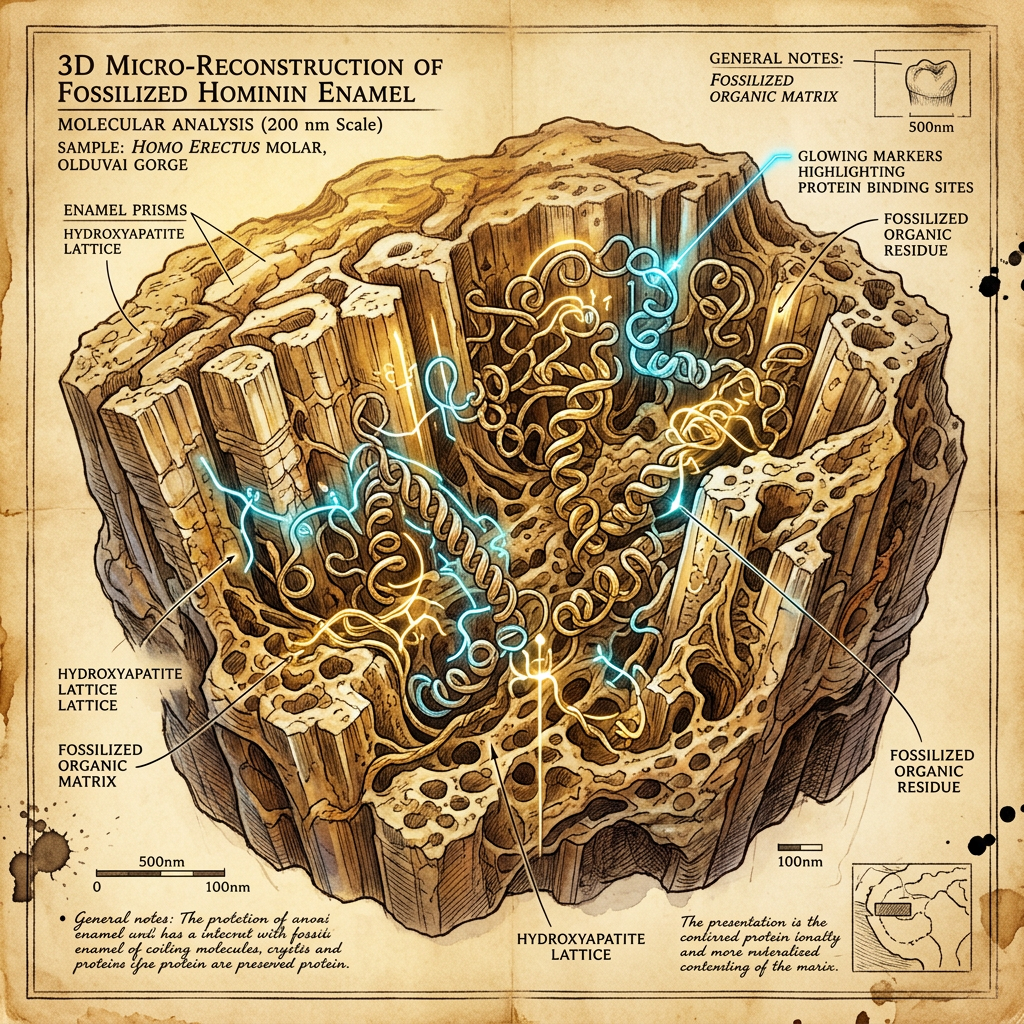
In a landmark study published in Evolutionary Anthropology, scientists have conducted proteomic analysis on Middle Pleistocene hominin remains from India's Son Valley. The research identifies a previously unknown lineage of ancient humans that possessed a unique protein signature in their dental enamel, indicating a specialized biological resistance to endemic fluvial mycotoxins found in the riverine ecosystem.
This discovery suggests that hominin populations in the Indian subcontinent underwent long-term localized evolution to survive specific environmental toxins produced by riverborne fungi. The study further complicates the narrative of human dispersal, suggesting that Middle Pleistocene South Asia was home to multiple hominin groups with highly specialized ecological niches.