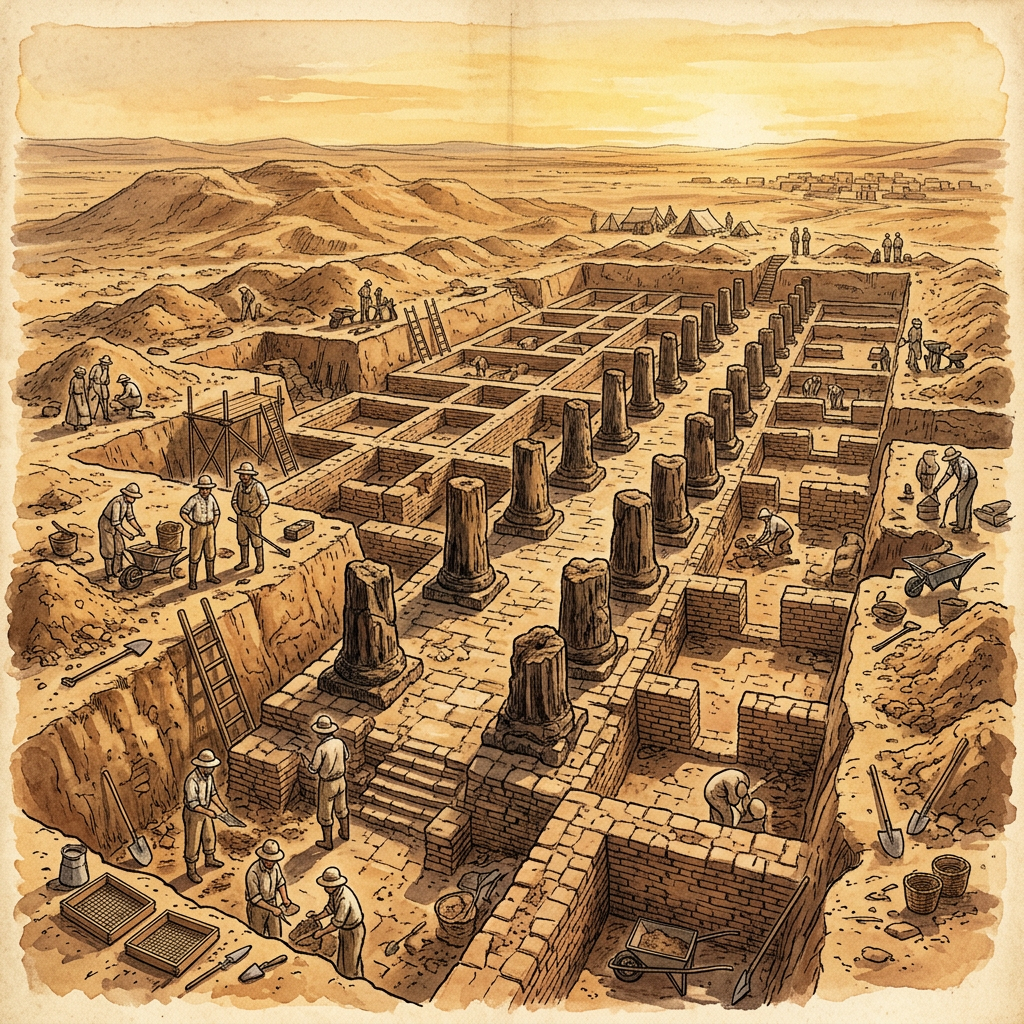
A breakthrough excavation in the Vidarbha region of Maharashtra has uncovered the structural foundations of a 5th-century royal palace attributed to the Vakataka Dynasty. Unlike most contemporary structures of that era which have long since perished, this site contains intact teak wood pillar bases and a sophisticated floor layout made of polished limestone and burnt brick, offering a rare glimpse into secular elite architecture in ancient India.
The palace complex includes an expansive central courtyard and a series of peripheral chambers that researchers believe functioned as administrative offices. Epigraphic evidence found nearby suggests that the palace may have served as a seasonal seat for Queen Prabhavatigupta, highlighting the dynasty's strategic control over internal trade routes and their patronage of high-quality craftsmanship in wood and stone.